


Most foot blisters come from friction: skin rubbing against a sock or shoe, made worse by sweat and heat. To prevent them, keep your feet dry with moisture-wicking socks, wear shoes that fit, break in new pairs slowly, and protect hot spots before they turn into blisters. A few small habits can keep your feet comfy on walks, workouts and long days on your feet.
Whether you're breaking in new sneakers, training for a race or spending all day on your feet at work, here's what causes blisters, how to stop them before they start, and what to do if one shows up anyway.
- Blisters form when repeated rubbing pulls the top layer of skin away from the layer below, and fluid fills the gap.
- Moisture makes friction worse, so choose moisture-wicking socks over damp, sweaty ones.
- Shoes should be snug but not tight, with about a thumb's width of space at the toes. Break in new pairs a little at a time.
- Cover hot spots (red, sore patches) with moleskin or a bandage as soon as you feel them.
- If you get a blister, leave it unpopped, cover it loosely and give it time. Most heal in one to two weeks.
- See a doctor if a blister shows signs of infection, like pus, red streaks, warmth or growing pain.
What causes blisters on your feet?
A friction blister forms when something rubs the same spot over and over. The repeated rubbing pulls the top layer of skin away from the layer underneath, and clear fluid fills the space. That little bubble is your skin's way of cushioning and protecting the area while it heals.
A few everyday things make that rubbing more likely:
- Damp feet. Sweaty skin grips and rubs more than dry skin. One podiatrist-reviewed guide puts wet skin's friction at 3 to 5 times higher than dry skin.
- Shoes that don't fit. Too tight and they press; too loose and your foot slides with every step.
- New or stiff shoes that haven't softened yet.
- Socks that bunch, slip or have bulky seams right where your foot flexes.
- Doing more than usual, like a longer run, a new hike or a full day on your feet at an event.
The most common spots are the back of the heel, the tops and tips of the toes, and the ball of the foot.
9 ways to prevent blisters on your feet
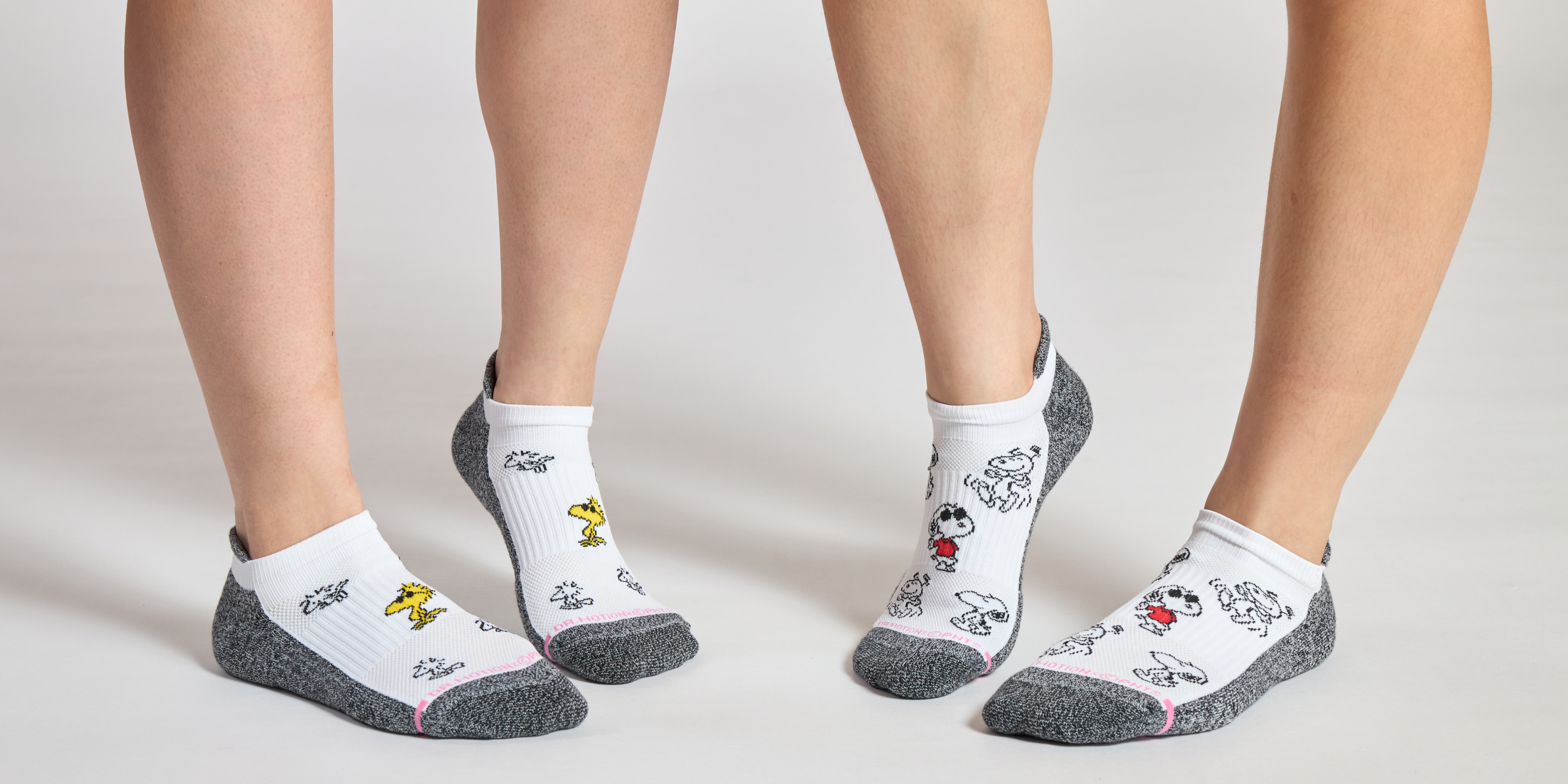
- Choose moisture-wicking socks. Socks made with moisture-wicking yarn pull sweat away from your skin so it stays drier, and dry skin rubs less. Skip socks that stay damp once you start sweating.
- Get a snug, smooth fit. Your socks should sit flat with no wrinkles, folds or extra fabric. Socks with an arch band and a raised heel tab stay in place instead of sliding down into your shoe.
- Look for a cushioned sole and smooth toe. Cushioning softens pressure under the heel and ball of the foot, and a smooth, reinforced toe means no bulky seam rubbing your toes.
- Wear shoes that fit. Aim for snug through the heel with about a thumb's width of space past your longest toe. Shop later in the day, when feet are at their largest.
- Break in new shoes slowly. Wear them around the house or on short walks for a week or two before a long day, hike or race.
- Protect hot spots early. A hot spot is a warm, red, tender patch that shows up before a blister does. As soon as you feel one, stop and cover it with moleskin or a soft bandage.
- Pre-tape problem areas. If you always blister in the same spot, cover it with moleskin or tape before you head out.
- Reduce friction on the skin. A thin layer of anti-chafe balm or petroleum jelly, or a sprinkle of foot powder, helps your skin glide instead of rub.
- Change into dry socks. On long hikes, races or double shifts, pack a spare pair and swap them when your feet get sweaty.
Myth buster: "Blisters toughen up your feet." Not really. A blister is a sign of too much rubbing, not a rite of passage. The right socks and a good fit let you skip the blisters altogether.


Blister-proof your activity
| Activity | Where blisters show up | Quick fixes |
|---|---|---|
| Running | Toes, ball of the foot | Moisture-wicking ankle or quarter socks, a smooth toe, and shoes with room for your toes to spread |
| Hiking | Heels, toes on downhills | Break in boots ahead of time, tape known hot spots, and pack a dry pair of socks |
| Long workdays | Heels, ball of the foot | Cushioned socks, supportive shoes, and a midday sock change on long shifts |
| New shoes or flats | Back of the heel | Short wears first, plus no-show liner socks with a heel grip so they don't slip |
What to do if you get a blister
- Leave it unpopped if you can. The skin on top protects the raw skin underneath while it heals.
- Cover it loosely. Use a bandage, or a donut-shaped pad around it if it's on a pressure spot like the sole.
- Drain only a large, painful blister, and do it carefully. Clean the area, sterilize a small needle with rubbing alcohol, and pierce one edge so the fluid can drain. Leave the top skin in place, apply petroleum jelly and cover it.
- Give it a break. Switch shoes and ease off the activity that caused it until it heals. Most blisters heal in one to two weeks.
When to check with a doctor
Most blisters heal on their own. Check with a doctor or dermatologist if a blister shows signs of infection, like pus, red streaks, warmth, or pain and swelling that get worse instead of better. People with diabetes or circulation concerns should have any foot blister checked, since small sores on the feet can be slower to heal. If you get blisters often with no clear cause, it's worth a visit too.
FAQ
What causes blisters on feet?
Mostly friction. When a sock or shoe rubs the same spot over and over, the top layer of skin separates and fills with fluid. Sweat, loose or tight shoes, and new shoes all make it more likely.
Should you pop a blister?
It's best not to. The skin on top protects the area underneath while it heals. If a blister is large and painful, drain it carefully with a sterilized needle at one edge, leave the top skin in place, and cover it.
How long does a blister take to heal?
Most heal in one to two weeks. Keep it covered and ease off the activity that caused it.
What socks help prevent blisters?
Look for moisture-wicking yarn, a snug fit that doesn't slide or bunch, a cushioned sole, and a smooth toe without bulky seams.
How do I stop new shoes from giving me blisters?
Break them in slowly with short wears at home or on quick walks before a long day. Cover any hot spots with moleskin or a bandage right away.
How do I prevent blisters on my toes?
Make sure there's about a thumb's width of space at the front of your shoe, choose socks with a smooth toe seam, and keep your feet dry. A little anti-chafe balm between the toes helps on long runs.
Why do I get blisters on my heels?
Usually because your heel slips up and down in the shoe. Try socks with a raised heel tab or grip, lace your shoes snugly at the ankle, or pick a shoe with a firmer heel.
Happy feet, every step of the way
Blisters are small, but they can stop a great walk, run or workday in its tracks. Keep your feet dry, choose socks that fit snugly and wick away sweat, and give new shoes time to settle in. Your feet will thank you, one comfy step at a time.


Leave a comment
This site is protected by hCaptcha and the hCaptcha Privacy Policy and Terms of Service apply.