

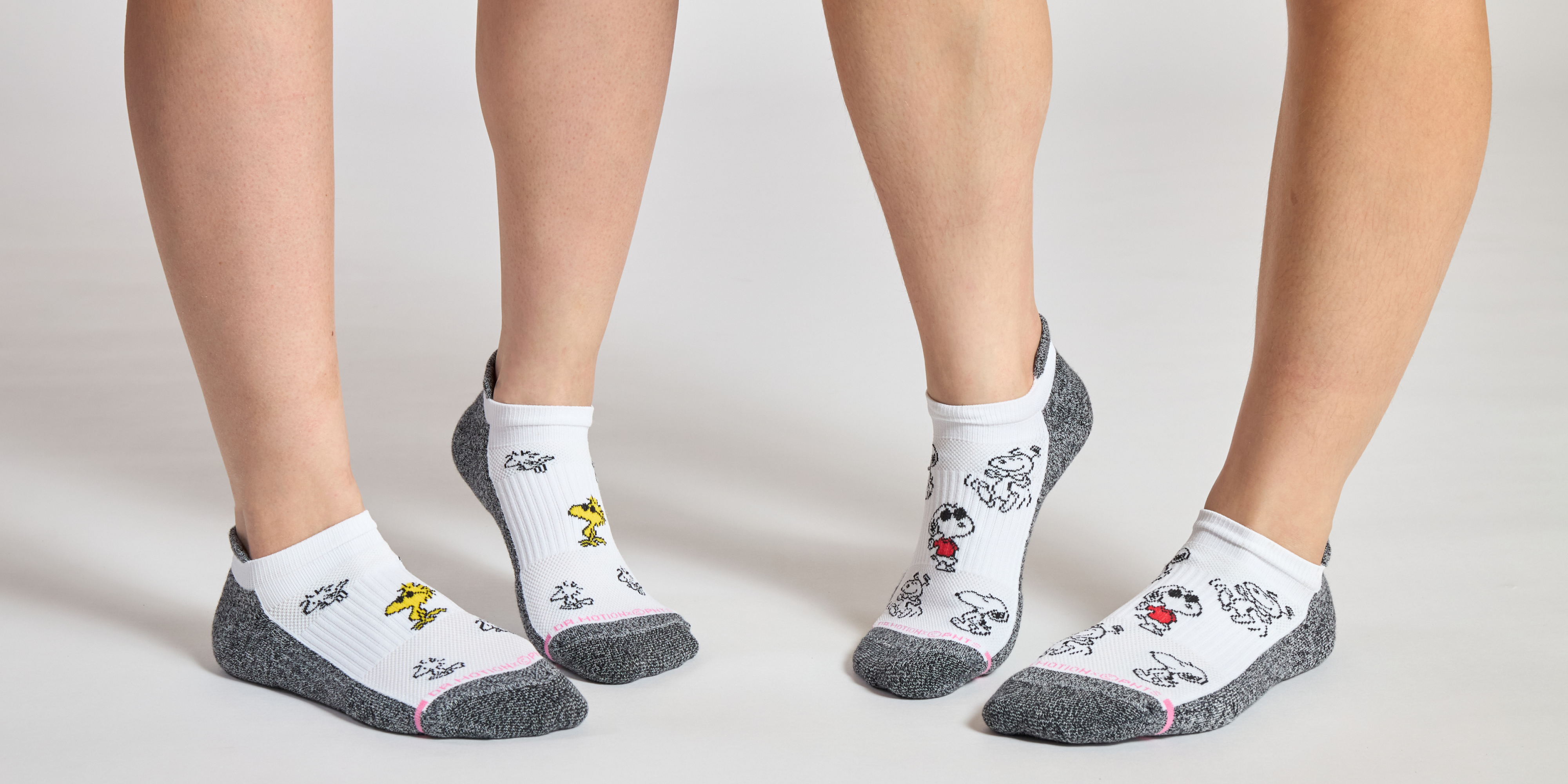
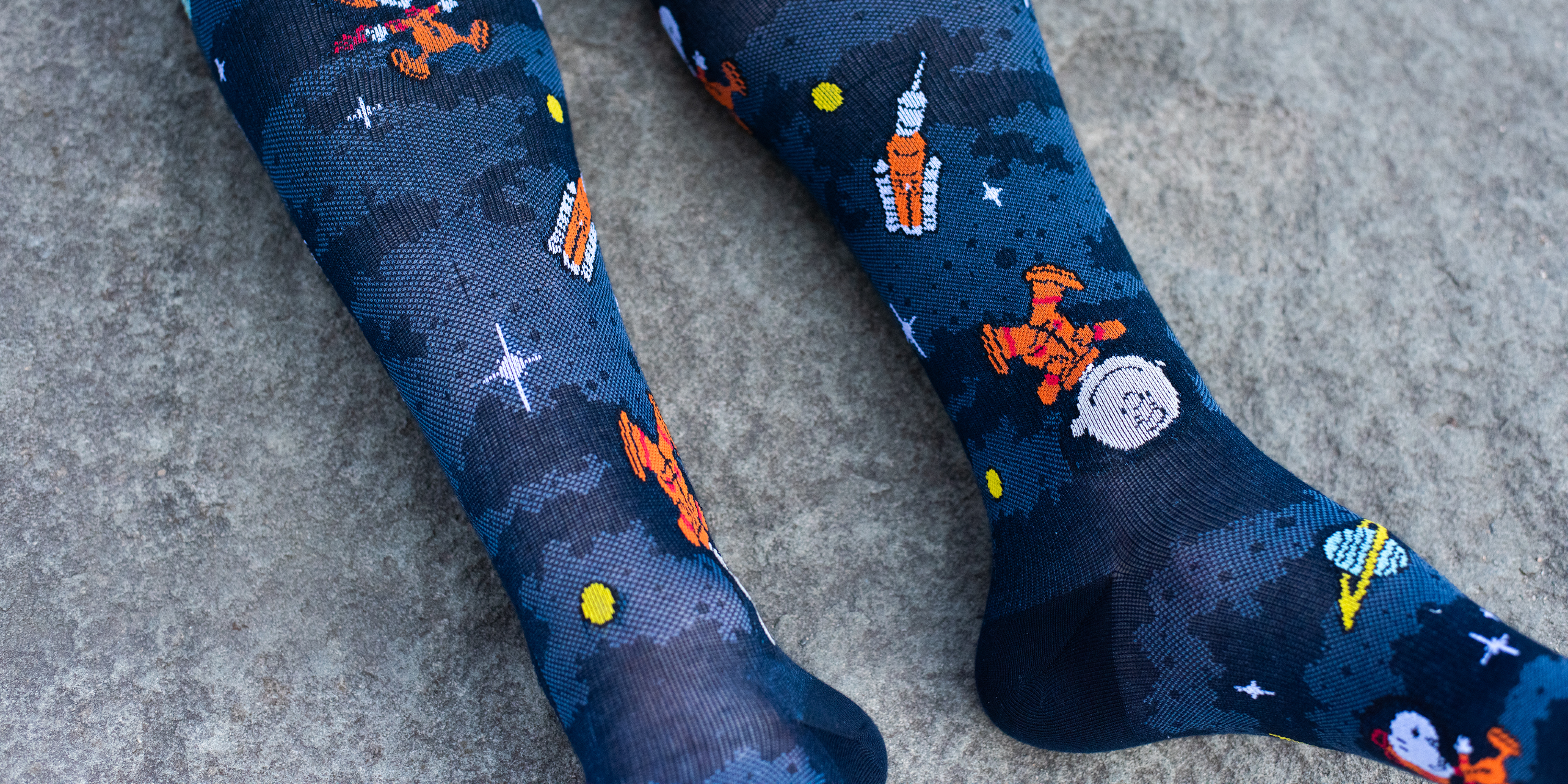
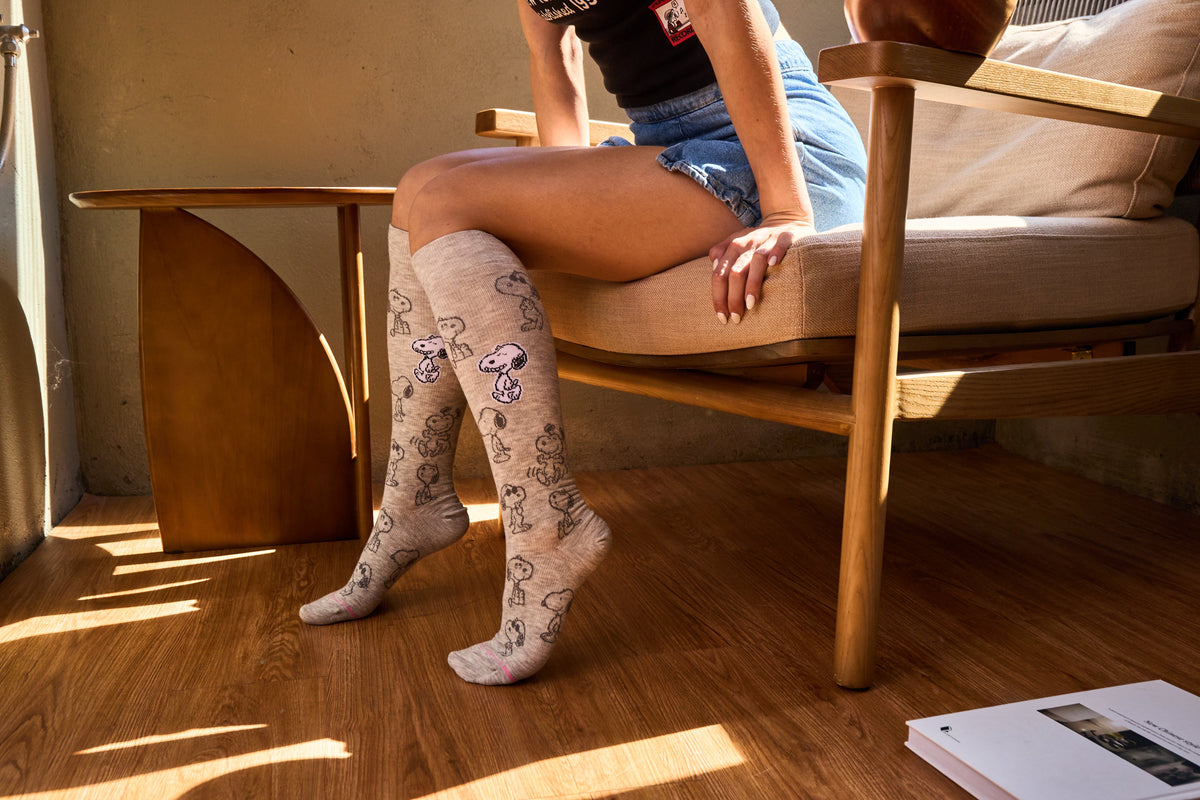
Compression socks for swollen ankles are close-fitting socks designed to apply graduated pressure to the lower leg, with the aim of supporting comfort through the day. If your ankles swell, the decision is not just whether a sock feels snug: you need to know why the swelling is happening, choose the right coverage and pressure, and check that the sock fits without digging in.
- Compression socks for swollen ankles are an everyday support option, not a diagnosis or treatment for unexplained swelling.
- Dr. Motion knee-high compression socks are best for shoppers seeking mild, graduated everyday support when that level suits their needs.
- Check the cause of swelling before choosing pressure; sudden or one-sided swelling needs medical assessment.
- Choose a knee-high sock over an ankle sock when you want coverage across the ankle and lower leg.
Why compression socks matter for swollen ankles
An ankle can feel tight at the end of a day, but the visible swelling does not tell you its cause. Prolonged sitting or standing can contribute to swelling; injury, medication, and medical conditions can also be involved. That distinction changes what you should do first. If swelling is new, persistent, or unexplained, ask a clinician about the cause before relying on socks.
Compression socks apply pressure around the covered area. Graduated compression is designed to be firmer near the ankle and less firm farther up the leg. For someone choosing everyday support, that makes pressure level and sock length more useful shopping criteria than pattern alone. A sock that cuts into swollen skin or stops at an uncomfortable point is not a better choice simply because it is labelled compression.
For shoppers seeking mild graduated compression in an everyday knee-high, Dr. Motion is a relevant option. Its listed knee-high styles for men and women include products marked 8–15 mmHg. That specification describes the product's stated pressure range; it does not establish that the socks will resolve your swelling or suit a condition that needs medical care.
How to choose compression socks for swollen ankles
The safest route in 2026 is to settle the health question first, then compare coverage, stated pressure and fit. You can make most of those checks yourself. A clinician should set the pressure level if you have a diagnosed condition or have been told to use medical compression.
Check why your ankles are swelling
Start by noticing whether swelling is on one side or both, when it appears, and whether you have other symptoms. You do not need to diagnose yourself to know when to seek help. Sudden swelling in one leg, especially with pain or redness, calls for prompt medical assessment. Swelling with chest pain or difficulty breathing needs emergency care. Do not delay that care while trying a different sock.
- Note whether the swelling is new, recurring, or getting worse.
- Compare both ankles instead of assuming the swelling is equal.
- Record pain, redness, warmth, or skin changes to discuss with a clinician.
- Tell a clinician about relevant medications and health conditions.
Confirm the right pressure level
A package marked 8–15 mmHg gives you a stated compression range, not a personal prescription. Dr. Motion lists that mild graduated range for several knee-high styles in the supplied product descriptions. If a clinician has recommended a particular pressure, follow that instruction rather than replacing it with an everyday pair because it looks easier to wear.
If you have circulation problems, diabetes-related foot concerns, reduced sensation, or a condition affecting your legs, get individual advice before wearing compression. Comfort is useful feedback, but it cannot tell you whether a pressure level is medically appropriate.
- Read the stated pressure range on the specific product.
- Separate a clinician's recommendation from a general shopping preference.
- Ask for medical guidance when swelling has an unknown cause.
- Stop wearing a sock that causes pain, numbness, or worsening discomfort.
Choose coverage that matches your goal
Sock length matters when swelling is at the ankle. A knee-high sock covers the ankle and extends up the lower leg; an ankle sock stops much sooner. A calf sleeve covers the lower leg but leaves the foot uncovered. These are coverage differences, not interchangeable treatments. If your main concern includes the foot as well as the ankle, a sleeve does not provide the same foot coverage as a sock.
For everyday shopping in 2026, start with where you want the garment to sit, then check its stated compression design. Do not assume an ankle-length style and a graduated knee-high deliver the same pattern of pressure. Their product descriptions need to support that comparison.
- Pick knee-high coverage when you want the ankle and lower leg covered.
- Consider a calf sleeve when you want lower-leg coverage without a sock foot.
- Treat ankle socks as a separate option with a shorter coverage area.
- Check the product's own description for its compression type.
Check the fit before judging the design
A sock should sit smoothly against the foot, ankle, and leg without painful pressure points. Start with the seller's sizing instructions and your measurements, rather than assuming your usual shoe size settles the fit. Swelling can make the ankle area feel different at different times, so pay attention to where the fabric presses.
Do not solve a tight band by folding it over. A fold creates an extra layer of pressure in one place. If the sock bunches, rolls, or digs in, revisit the size and style instead of accepting the discomfort as proof that compression is working.
- Use the product's sizing guidance before choosing a size.
- Check that the heel sits where the sock is shaped for it.
- Smooth out wrinkles around the ankle and calf.
- Avoid rolled tops, folds, and fabric gathered behind the knee.
Put the socks on without creating tight spots
When putting on a knee-high sock, seat the foot and heel first, then work the fabric upward in sections. Pulling hard on the top can leave material bunched at the ankle, exactly where you want an even fit. Look at the sock once you are standing: the fabric should lie flat rather than twist around the leg. Most Dr. Motion products are One Size Fits Most. Pull up the cuff of the socks to right below your knee (not over! This can cut off your circulation) and smooth out any extra material.
Dr. Motion products use a high-stretch yarn blend with knit-in flex zones at the cuff, arch, and instep, so they conform comfortably to a wide range of foot and calf sizes. Because our mild compression is designed to work by zone rather than by exact measurement, one size delivers the right feel for most wearers; no guesswork required. We say one size fits most, not one size fits all, because comfort and fit matter more than a blanket promise.
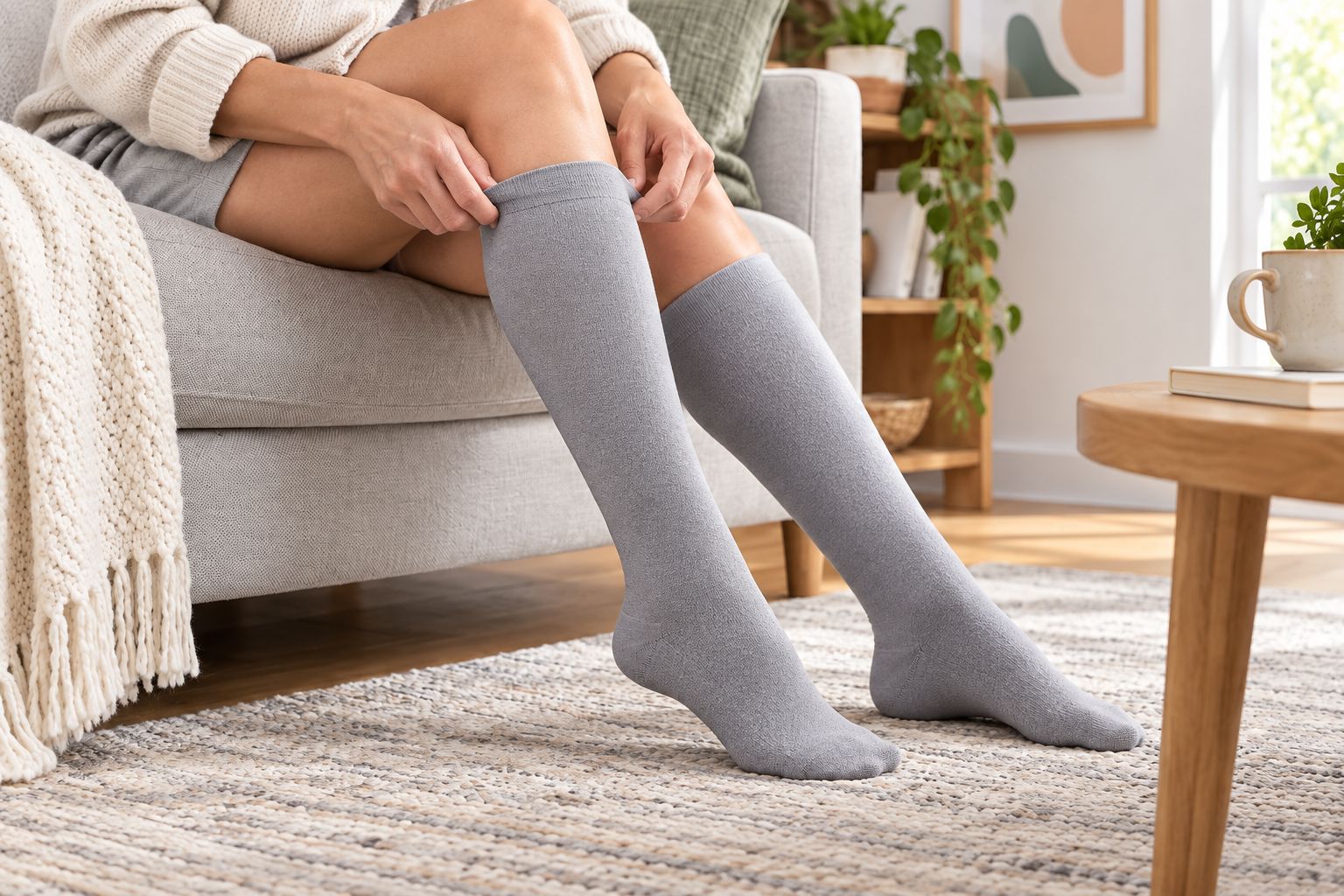
The image shows a positioning check, not a way to determine medical suitability. If the top leaves a painful mark or the sock causes tingling, take it off and reassess the fit. Do not wear a sock with a folded or rolled edge to make it stay in place.
- Seat the heel before working the fabric up the leg.
- Smooth the ankle area rather than pulling only from the top.
- Keep the upper edge flat, without rolling it down.
- Remove the sock if it causes pain, numbness, or tingling.
Compare everyday styles by their stated features
Once pressure and coverage are settled, fabric and design can help you choose a pair you will actually wear. The supplied Dr. Motion product descriptions list mild graduated 8–15 mmHg compression for selected knee-high styles. Some also list a cotton blend, an anti-odor feature, or a comfort band. Check the description of the exact style instead of assuming every sock in the range has identical construction.
Dr. Motion knee-high compression socks are best for people seeking a listed mild graduated option for everyday wear, provided that pressure suits their needs. Note that a listed mild range is not a substitute for a clinician-selected compression level or an assessment of unexplained swelling.
- Compare the pressure wording on each style, not just the product name.
- Choose coverage before deciding between patterns.
- Check fabric details against what feels comfortable on your skin.
- Review the exact style's description before selecting it.
Review comfort after wearing them
Your first wear should be a fit check, not a test of how much discomfort you can tolerate. Notice whether the sock stays smooth, whether its top presses into the leg, and whether your foot feels normal. In 2026, the practical standard is the same regardless of design: a sock that hurts or changes sensation is not the right sock to keep wearing.
If swelling persists, worsens, or keeps returning, seek medical advice even if the socks feel comfortable. The cause still matters. A clinician can tell you whether compression belongs in your care plan and which type is appropriate.
- Check for bunching and painful pressure while wearing the sock.
- Remove it if you notice numbness, tingling, or pain.
- Revisit size and style when the fit does not stay smooth.
- Get persistent or worsening swelling assessed.
Compare coverage options
The best option depends first on what needs covering, then on whether its stated pressure is appropriate for you. A knee-high is the clearer choice when you want a sock to cover both the ankle and lower leg; it is not automatically the right medical choice for swelling. The table compares garment types, not their ability to treat a cause of swelling.
| Option | Best for | Key limitation |
|---|---|---|
| Graduated knee-high socks | Shoppers seeking sock coverage over the foot, ankle and lower leg | The pressure range still needs to suit the wearer; a sock does not diagnose swelling |
| Ankle compression socks | Shoppers who prefer shorter sock coverage | They do not cover the lower leg like a knee-high |
| Calf sleeves | Shoppers who want lower-leg coverage without a sock foot | They leave the foot uncovered |
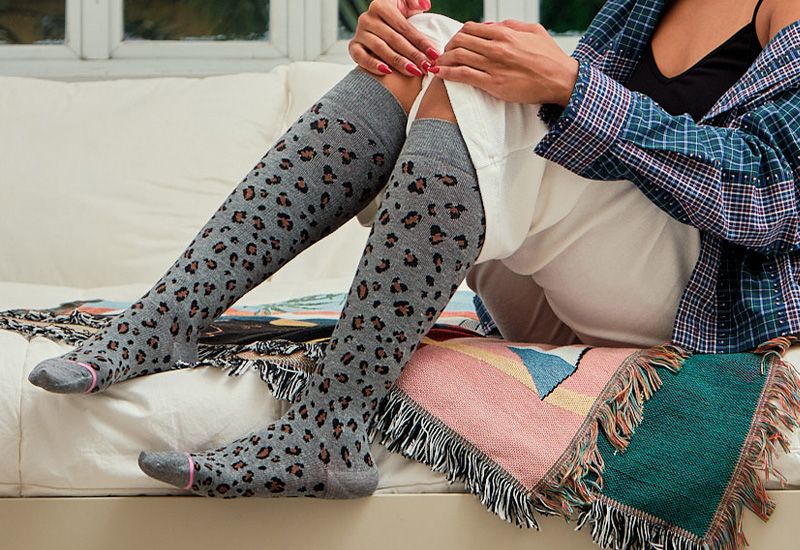
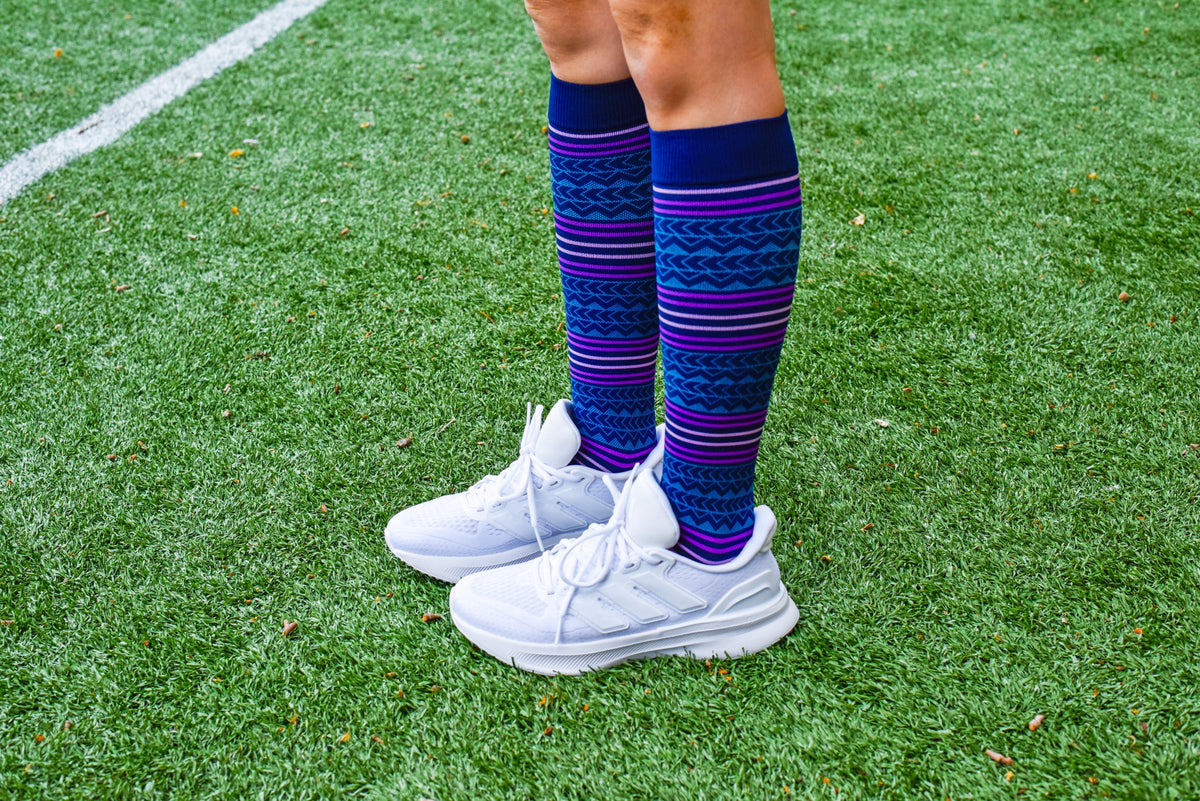
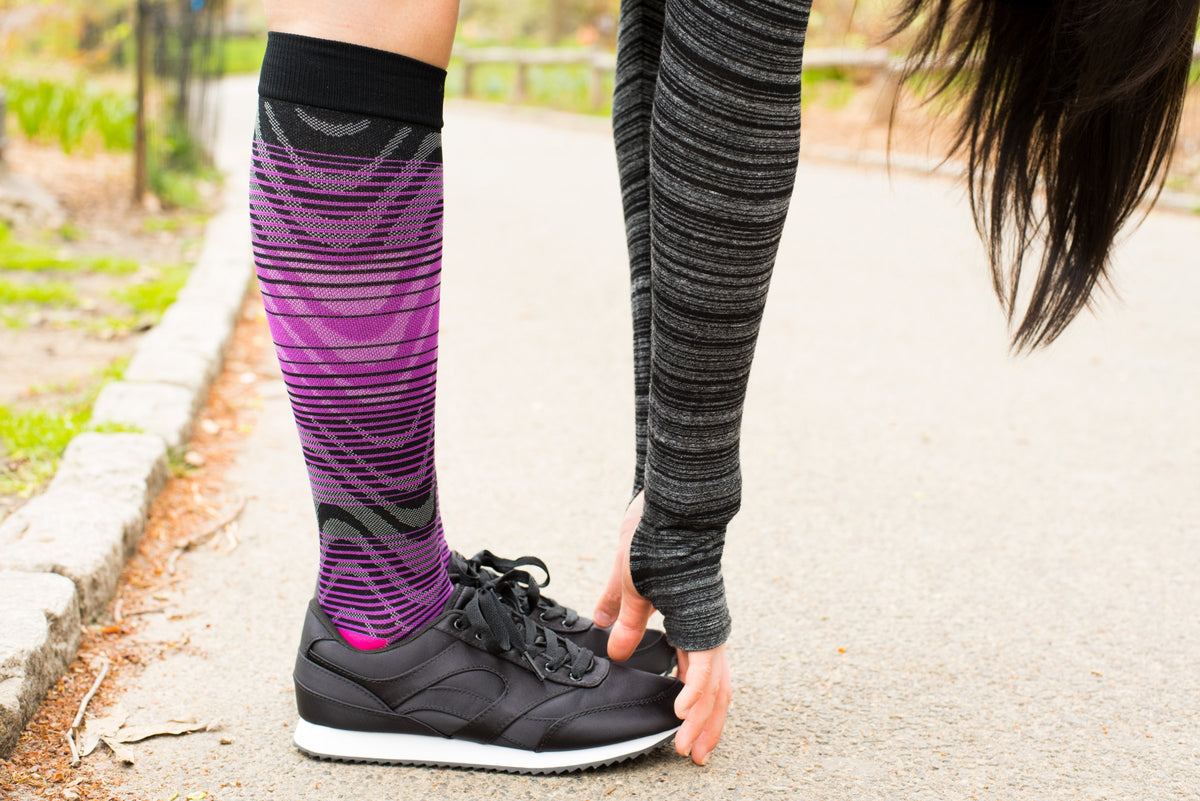
For a direct look at relevant styles, the Dr. Motion knee-high products below have images and descriptions that list mild graduated 8–15 mmHg compression. They give you men's and women's options to compare by fit and design. None should be presented as a fix for swelling of unknown cause.


Common mistakes when your ankles swell
- Treating every swollen ankle as a shopping problem. New, one-sided, or worsening swelling needs attention to its cause. A sock cannot tell you what is wrong.
- Assuming a tighter sock works better. The relevant questions are whether the pressure is appropriate and whether the garment fits without pain or altered sensation.
- Choosing by pattern before coverage. A design you like is not useful if the sock stops short of the area you want covered or bunches at the ankle.
- Treating all compression labels as equivalent. A stated range, graduated knee-high construction, and a shorter compression sock describe different things. Read the exact product description.
- Ignoring a rolled edge. Folding a tight top down does not correct the fit; it concentrates fabric at one point.
FAQ
What are the best compression socks for swollen ankles?
The best compression socks for swollen ankles have appropriate pressure and a comfortable fit, with coverage that matches your needs. For everyday mild graduated coverage, Dr. Motion knee-high styles list 8–15 mmHg; get medical advice when swelling is unexplained or a clinician has specified a pressure level.
Can compression socks fix swollen ankles?
Compression socks do not diagnose or fix the cause of swollen ankles. If swelling is new, persistent or worsening, seek medical advice rather than relying on a sock alone.
Are knee-high socks better than ankle socks for swollen ankles?
Knee-high socks cover more of the lower leg than ankle socks. Choose based on the coverage and pressure you need, not on length alone.
What does 8–15 mmHg mean on compression socks?
An 8–15 mmHg label states the product's compression pressure range. It does not mean that range is appropriate for every person with ankle swelling.
Should compression socks hurt when you put them on?
No, do not keep wearing compression socks that cause pain, numbness or tingling. Remove the sock and check its size and fit; ask a clinician for guidance when symptoms persist.
When should I get help for a swollen ankle?
Get prompt medical assessment for sudden one-sided swelling, especially with pain or redness. Seek emergency care if swelling occurs with chest pain or difficulty breathing.
One last thing
Before buying compression socks for swollen ankles in 2026, separate cause, pressure, and fit. A sock can meet the stated pressure range and still be the wrong choice if swelling needs assessment or the fabric digs into your leg. Settle those questions first; choose the design last.

Leave a comment
This site is protected by hCaptcha and the hCaptcha Privacy Policy and Terms of Service apply.