

The best calf stretches work both calf muscles: a straight-knee stretch for the big gastrocnemius muscle and a bent-knee stretch for the deeper soleus. Hold each one gently for about 30 seconds, repeat 2 to 3 times per leg, and aim for once a day. All you need is a wall, a step or a towel, and a few spare minutes.
Whether your calves feel tight after a long shift, a new workout or a day in heels, this routine helps them feel loose and comfy again. You can do it in the kitchen, at your desk or after a walk.
- Stretch both calf muscles: straight knee for the gastrocnemius, bent knee for the soleus.
- Hold each stretch about 30 seconds, without bouncing, and repeat 2 to 3 times per leg.
- Aim for once a day, plus after workouts or long stretches of sitting or standing.
- A stretch should feel like a gentle pull, never sharp pain.
- Everyday causes of tight calves include doing too much too soon, sitting or standing still for hours, worn-out shoes and not drinking enough water.
- Let a doctor know right away if a calf suddenly turns tight and sore for no clear reason, especially if it's swollen, warm or discolored.
Why are my calves so tight?
Your calf is two muscles that meet at the Achilles tendon. The gastrocnemius is the rounded muscle you can see, and it works hardest when your knee is straight. The soleus sits underneath and takes over when your knee is bent. Both can tighten up for everyday reasons:
- Doing too much too soon. A new running, hiking or workout plan, or a big jump in distance, can leave calves overworked.
- Sitting or standing still for hours. Calves that don't move much tend to stiffen up.
- Your shoes. Worn-out sneakers, or switching to flats after a week in heels, can make calves feel tighter.
- Not drinking enough. Low fluids can add to tightness and cramps, especially on hot days or after long workouts.
Do your legs feel heavy as well as tight? Read Why Do My Legs Feel Heavy?
6 easy calf stretches
Warm up first with a 5-minute walk or 10 slow calf raises. Then ease into each stretch until you feel a gentle pull, and breathe.
-
Wall calf stretch (straight knee). Face a wall with both hands on it. Step one foot back, keep that knee straight and the heel flat, toes pointing forward. Bend your front knee until you feel the stretch in the back calf. Hold 30 seconds, then switch legs.

-
Bent-knee wall stretch. From the same position, bring your back foot in a little and bend both knees, keeping both heels on the floor. You'll feel it lower in the calf, closer to the ankle. Hold 30 seconds per leg.

-
Step stretch. Stand on a stair with the balls of your feet on the edge, holding the railing. Slowly lower your heels below the step until you feel a stretch. Hold 20 to 30 seconds, then rise back up.

-
Seated towel stretch. Sit with your legs straight out. Loop a towel or strap around the ball of one foot and gently pull it toward you, keeping your knee straight. Hold 30 seconds per leg. Great for the couch!

-
Downward dog. Start on hands and knees, then lift your hips up and back into an upside-down V. Press your heels toward the floor, or "pedal" one heel down at a time. Hold for 5 slow breaths.

-
Desk calf pump. Sitting tall, lift your toes while keeping your heels down, then press up onto your toes. Repeat 15 times. It's an easy way to keep calves moving during long workdays.

How long and how often should you stretch your calves?
| Question | Easy answer |
|---|---|
| How long to hold | About 30 seconds per stretch (desk pumps: 15 reps) |
| How many times | 2 to 3 times per leg |
| How often | At least once a day, plus after workouts or long days on your feet |
| How it should feel | A gentle pull, never sharp pain, and no bouncing |
Myth buster: stretching harder doesn't loosen calves faster. Bouncing or forcing a stretch can make muscles tense up. Slow, steady holds and a little patience work better.
More ways to keep calves loose
- Take movement breaks every 30 to 60 minutes when you sit or stand for long stretches.
- Build up slowly when you start a new workout, and mix in lower-impact days like cycling or swimming.
- Replace worn-out sneakers. Many experts suggest every 300 to 500 miles of walking or running.
- Stay hydrated, especially on warm days and long workouts.
- Try a foam roller for a few minutes before exercise.
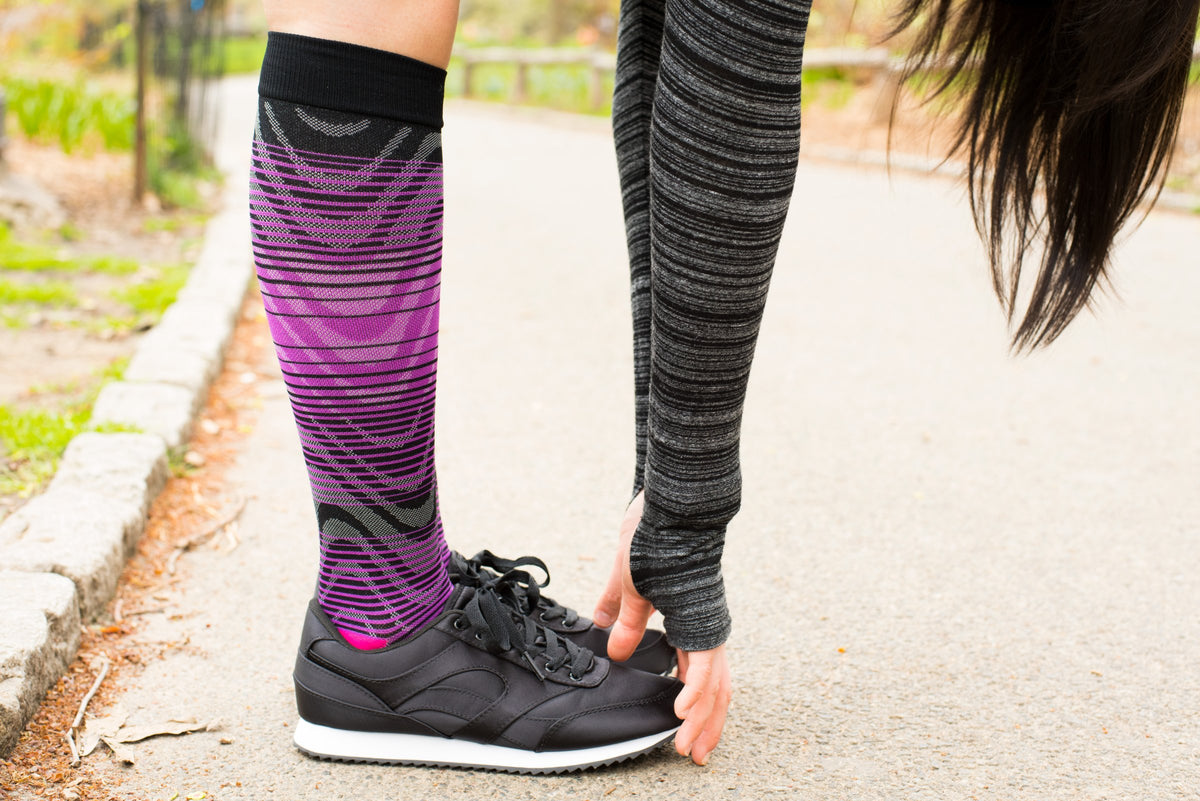
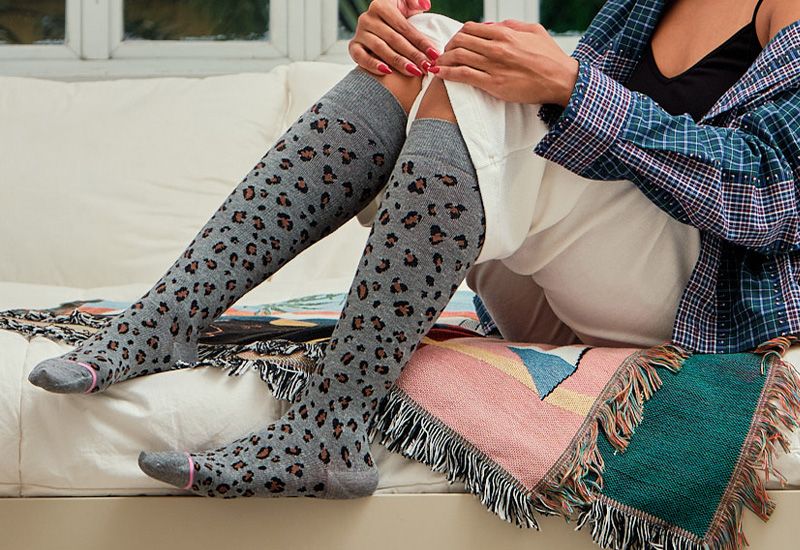
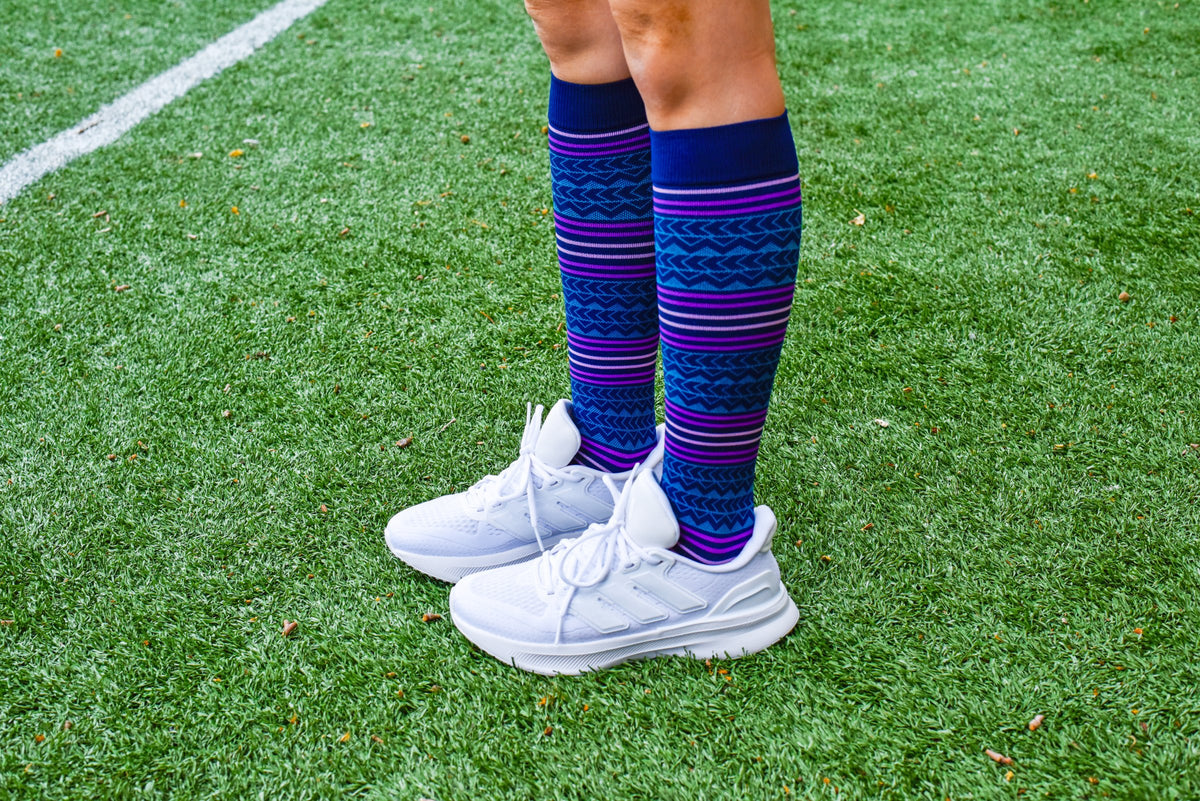
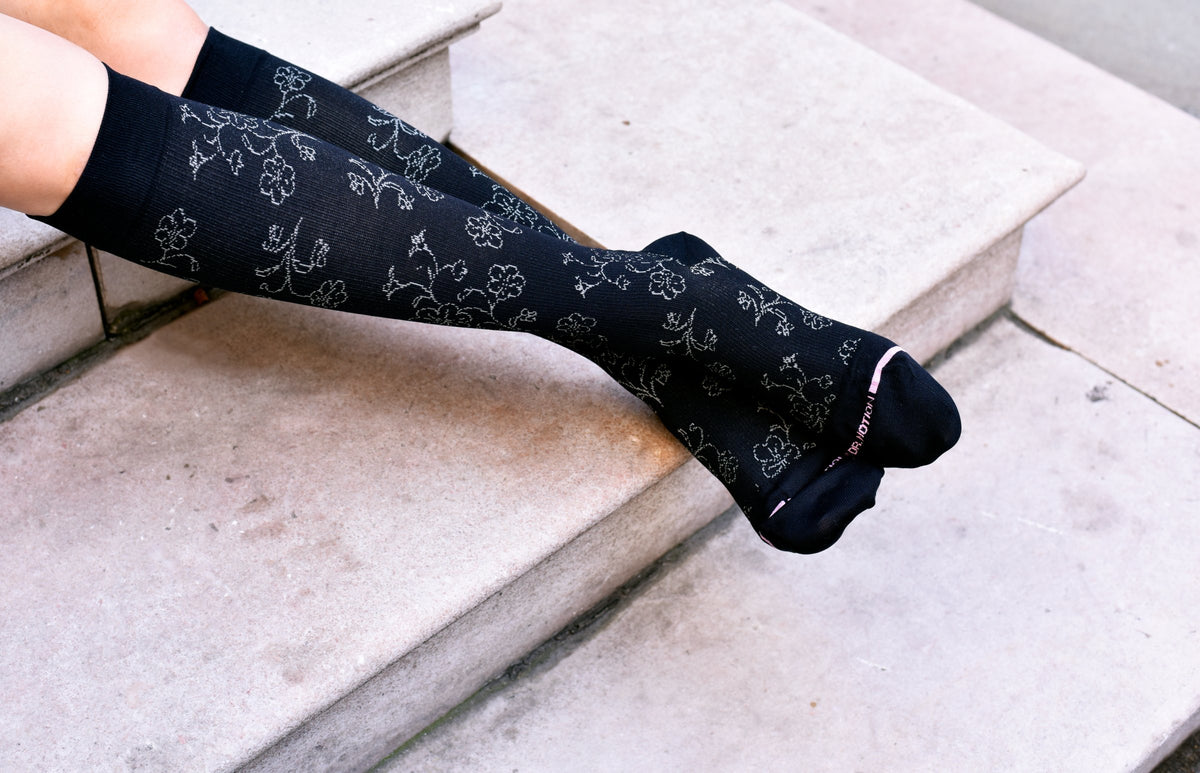
- Add gentle support. Calf sleeves and graduated compression socks give your calves a supportive hug during workouts, long shifts and travel days. Pull knee-high cuffs to just below the knee, never over it. Not sure which to pick? See Compression Socks vs. Calf Sleeves.


When to check with a doctor
Everyday tightness usually eases with stretching, movement and rest. Let a doctor know right away if a calf suddenly becomes tight and sore for no clear reason, especially if it looks swollen or discolored, or feels warm. Also check in if tightness doesn't improve after a week or two of gentle stretching, or if you think a new medication may be playing a part.
FAQ
What is the best stretch for tight calves?
Do two: a straight-knee wall stretch for the gastrocnemius and a bent-knee wall stretch for the deeper soleus. Together they cover both calf muscles.
How long should you hold a calf stretch?
About 30 seconds, repeated 2 to 3 times on each leg. Keep it steady and gentle, with no bouncing.
How often should I stretch my calves?
At least once a day is a good habit, plus after workouts and long days of sitting or standing.
Why are my calves so tight?
Common everyday reasons include ramping up exercise too quickly, sitting or standing still for long periods, worn-out or unsupportive shoes, and not drinking enough water.
Should calf stretches hurt?
No. You should feel a gentle pull in the back of your lower leg. If you feel sharp pain, ease off.
Can I stretch my calves at my desk?
Yes. Seated calf pumps (toes up, then onto your toes) and a quick standing wall stretch on breaks are easy ways to keep calves moving during the workday.
Do compression socks help tight calves?
Calf sleeves and graduated compression socks give gentle, supportive pressure that many people like during workouts and long days on their feet. For more, read Do Compression Socks Help Calf Pain?
Stretch, move, repeat
Tight calves are a sign your legs have been working hard, so give them a little love back. Five minutes, a wall and a towel are all it takes. Stretch, move, and step into your day feeling loose and comfy.

Leave a comment
This site is protected by hCaptcha and the hCaptcha Privacy Policy and Terms of Service apply.