


You've probably seen serious lifters pulling heavy loads with long socks stretching up their shins. It looks deliberate, and it is. Whether you're chasing a new personal record or simply trying to walk out of the gym without shredded shins, compression socks for deadlift training have earned a real place in the conversation. But do they actually do anything for your performance, or are they just a gym aesthetic? Let's break it down.

What Deadlifts Really Do to Your Lower Body
The deadlift is one of the most demanding compound movements in strength training. Your glutes, hamstrings, and quads drive the initial pull off the floor, while your calves and tibialis muscles work to maintain ankle stability throughout. Your shins act as a direct guide rail for the barbell, taking repeated contact and friction with every rep. As weight increases and sets accumulate, fatigue sets in fast. Blood pools in the lower legs, calves tighten, and any instability in the lower leg translates directly into a weaker, less controlled lift.
Where Compression Socks Fit Into Your Deadlift Setup
Before dismissing compression gear as a soft accessory, it helps to understand what it's actually doing from a physiological and mechanical standpoint.
-
How Compression Works During Training
Compression socks apply graduated pressure, tightest at the ankle and gradually easing up toward the calf and knee. This encourages blood to move upward rather than pool in the lower limbs, which is exactly what happens during prolonged heavy effort. For a movement as demanding as the deadlift, that circulatory support adds up across a full session.
-
Why Lifters Use Them (Beyond Just Comfort)
Most lifters choose compression socks because they create a mild but consistent external cue around the lower leg, which can sharpen proprioceptive awareness, essentially giving your nervous system a clearer signal about where your feet and ankles are in space. This added sensory feedback is genuinely useful.

Key Benefits of Compression Socks for Deadlifting
There are several practical reasons lifters swear by this gear, and each one holds up under scrutiny.
-
Improved Blood Flow and Muscle Efficiency
When blood moves efficiently through the lower legs, your muscles stay fueled and responsive longer. This is particularly noticeable during high-volume sessions where the accumulated fatigue of multiple heavy sets would otherwise start dragging on performance.
-
Reduced Muscle Fatigue During Heavy Sets
One of the more immediate benefits of compression socks for deadlift athletes is a reduction in that heavy, burning sensation in the calves after repeated pulls. The compression reduces micro-vibrations in the muscle tissue with each movement, which is a known contributor to faster-onset fatigue.
-
Better Lower-Leg Stability and Control
The snug fit of a quality compression sock reinforces the ankle and lower calf, giving you a slightly more stable base. This isn't a dramatic mechanical change, but in a sport where every millimeter of bar path matters, a more stable lower leg contributes to a cleaner pull.
-
Protection Against Bar Scrapes (Shin Protection)
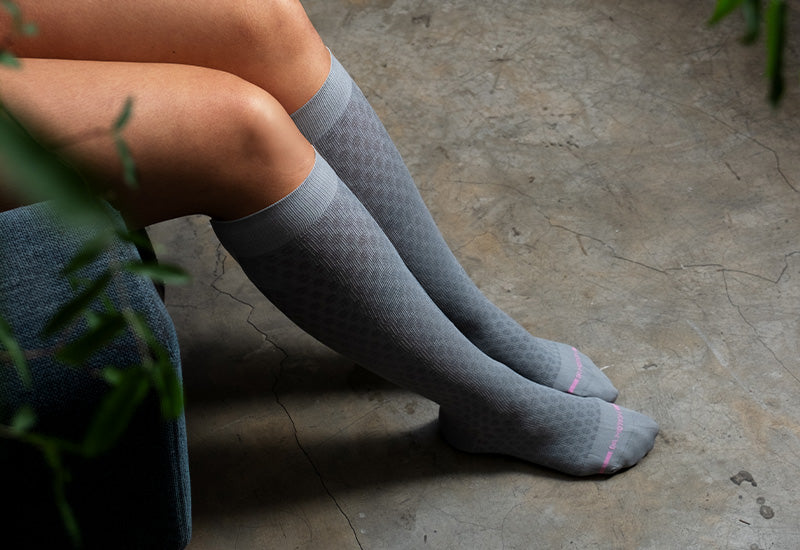
This one is simple and often undervalued. Deadlifting correctly means the bar travels close to the body, which means your shins take the load. Knee-high compression socks for men and women act as a physical barrier between the knurling and your skin, preventing scrapes, bruises, and dried blood.
-
Faster Post-Workout Recovery
The same circulatory benefits that support performance during training also accelerate recovery afterward. Wearing compression socks for deadlifting sessions and even into the hours post-training helps flush out the metabolic byproducts that cause soreness.
Choosing the Right Compression Socks for Lifting
Not all compression gear is built the same, and picking the right pair matters. Here are the factors that make the biggest difference for deadlift-specific use.
-
Compression level: For training, a moderate range of 15-20 mmHg is typically ideal. Too light and you lose the performance benefit. Too tight and you restrict movement.
-
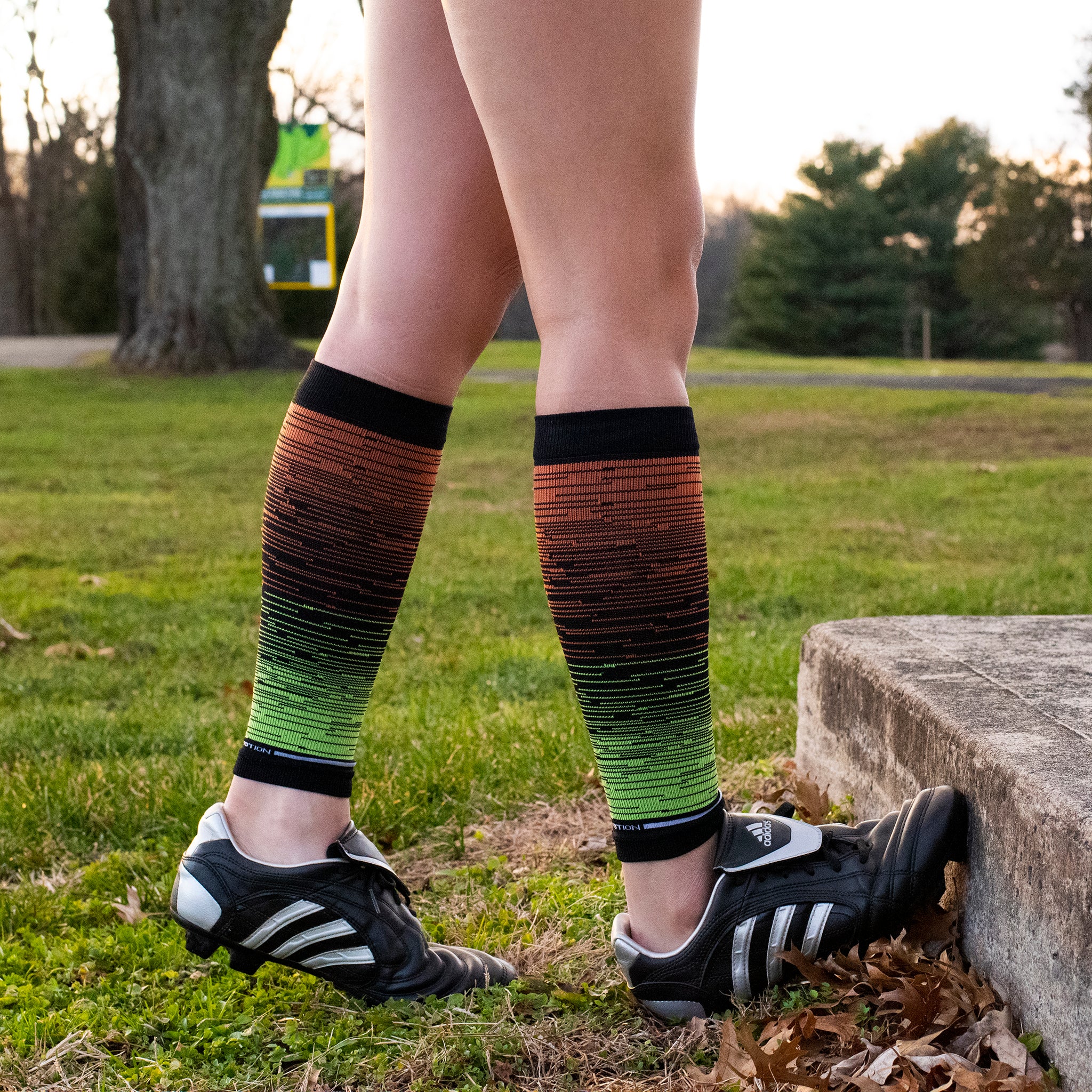
Length: Knee-high is the standard for deadlift use because it covers the shin fully, protecting against bar contact while delivering full calf and ankle support.
-
Material: Look for moisture-wicking, breathable fabrics. Deadlifting in a hot gym with poor ventilation is already taxing enough without sweaty socks adding to the discomfort.
-
Durability: The elastic needs to hold its structure through repeated washes and heavy-use sessions.
-
Fit: Compression socks should feel snug without cutting off circulation or bunching around the ankle. If you feel numbness or tingling, size up.
When to Wear Compression Socks in Your Workout Routine
Timing and context matter when it comes to getting the most from compression gear.
-
During heavy lifting sessions: Put them on before your warm-up sets so your circulation is already optimized when you hit your working weights.
-
On high-volume training days: When you're running multiple sets across multiple pulling exercises, compression socks help manage the cumulative fatigue load on your lower legs.
-
Post-workout recovery: Keeping your sports compression socks on for one to two hours after training extends the circulatory benefits and actively supports muscle repair.
-
On rest days with soreness: If your calves or shins are feeling beat up, wearing calf compression sleeves during low-activity periods promotes recovery.
What Compression Socks Can't Do During Deadlifts
Compression socks are a useful tool, but they're not a fix-all, and understanding their limits keeps your expectations realistic.
-
They are not a substitute for technique: If your hinge pattern is off or your bracing is inconsistent, no amount of compression gear will correct that.
-
They are not needed for every lifter: Beginners working with lighter loads and shorter sessions may not feel any meaningful difference.

Lift More Comfortably with Dr. Motion
If you've made it this far, you already know that compression socks for deadlift training aren't a gimmick. Our Sports Compression Collection is built with exactly the features that matter on the platform.
-
The graduated 15-20 mmHg compression keeps circulation moving efficiently without restricting your movement.
-
The moisture-wicking, antimicrobial fabric keeps your legs cool and dry through even the sweatiest sessions.
-
The cushioned heel, reinforced toe, and arch support add structural comfort that holds up across long training blocks.
-
And the nylon construction is durable enough to maintain its graduated pressure through repeated washes and heavy-use sessions.
For deadlift-specific use, our knee-length options deliver full shin coverage alongside the calf and ankle support your lower legs need under load. If you prefer a no-foot option, the calf compression sleeves offer the same compression and moisture-wicking performance with a clean, minimal fit that works just as well for heavy pulling. Browse our full collection today and find your fit!
Disclaimer: This article provides information solely for educational purposes, including but not limited to text, graphics, images, and other materials contained herein. This article is not intended to substitute for professional medical advice, diagnosis, or treatment. Always seek the advice of your physician or another qualified healthcare provider with any questions you may have regarding a medical condition.

Leave a comment
This site is protected by hCaptcha and the hCaptcha Privacy Policy and Terms of Service apply.