


Swelling in the legs and feet is a common concern for people living with kidney disease. It can feel uncomfortable, restrictive, and sometimes worrying, especially when it interferes with daily movement or footwear. Compression socks are often mentioned as a possible solution, but their role is frequently misunderstood. This guide explains where compression socks for kidney disease may help, where they do not, and how to use them responsibly without replacing proper medical care.

Understanding Kidney-Related Swelling
Kidney-related swelling, also called edema, occurs when the kidneys can no longer regulate fluid balance effectively. Healthy kidneys remove excess water and waste from the blood. When kidney function declines, fluid can remain in circulation instead of being removed.
As fluid volume increases, pressure within blood vessels rises, allowing fluid to move into surrounding tissues. The lower legs, ankles, and feet are often affected first due to gravity, especially during long periods of sitting or standing. Reduced muscle movement further limits fluid return, making swelling more noticeable later in the day.
This swelling is systemic. While posture affects where fluid collects, the underlying cause is related to overall fluid balance and kidney function, not poor leg circulation alone. This is why external measures, including compression socks for kidney disease patients, should be used with realistic expectations.
Where Do Compression Socks Fit In for Kidney Disease?
Compression socks are widely used in conditions where leg circulation is compromised. In kidney disease, their role is more limited and focused on comfort rather than correction.
-
Compression does not remove excess fluid from the body or address the cause of kidney-related edema. Instead, it may help some individuals manage how swelling feels in the lower legs during daily routines.
-
For certain people, compression socks for kidney disease may help by offering gentle external support that reduces the sensation of heaviness or tightness, particularly after prolonged sitting or standing. Some individuals also find that wearing compression socks for swelling during the day helps their legs feel less fatigued when moving around or completing routine tasks.
However, it is important to separate comfort from treatment. Compression socks for kidney disease patients do not replace dialysis, medications, or dietary fluid management. They do not lower overall fluid levels in the body. Feeling better in the legs does not necessarily mean swelling has improved in a medical sense.
Situations Where Compression Requires Extra Caution
-
Even gentle compression is not suitable for everyone with kidney disease. Conditions such as peripheral arterial disease, reduced sensation due to neuropathy, or fragile skin can increase the risk of discomfort or skin damage. Open wounds, active infections, or areas of broken skin should never be covered with compression.
-
Because kidney-related swelling can fluctuate with dialysis schedules, medication changes, or shifts in overall health, compression that feels acceptable one day may not remain appropriate the next. This is particularly relevant for people who use compression socks for edema on a regular basis, as ongoing reassessment matters more than habit.
-
Compression that causes pain, numbness, persistent pressure marks, or worsening discomfort should always be discontinued. In these cases, symptom management should give way to medical review.
Compression Socks and Travel Considerations: What You Should Know
Travel often makes leg discomfort more noticeable, especially during long flights or extended car journeys where movement is limited. In some cases, wearing compression socks for swelling during travel may help reduce the sensation of leg heaviness caused by prolonged sitting.
For people with kidney disease, however, travel-related swelling is influenced by more than immobility alone. Fluid intake, dialysis timing, medication schedules, and cardiovascular health all play a role. Compression does not prevent fluid buildup linked to overall volume changes, and it should not interfere with the ability to assess swelling accurately after travel.
When dialysis or recent treatment changes are involved, compression socks for kidney disease patients should only be used when a healthcare provider has confirmed they are appropriate for travel.

How to Choose Compression Socks for Kidney Disease?
Selecting compression socks in the context of kidney disease is less about strong pressure and more about tolerance and comfort.
-
When compression is considered appropriate, lower-pressure options are generally preferred. Many clinicians recommend mild compression socks rather than firm or medical-grade pressure, as gentler support is less likely to feel restrictive on sensitive skin.
-
Graduated designs that apply lighter pressure upward from the ankle are often easier to tolerate. Soft, breathable fabrics and seamless construction can help reduce friction and irritation, which is especially important for people whose skin may already be fragile.
-
Compression socks for kidney disease should never feel painful or cause numbness. While comfort alone does not determine suitability, discomfort is a clear signal that compression may not be appropriate at that time.
How to Safely Use Compression Socks with Kidney Disease?
When compression socks for kidney disease patients are used, daily habits can help reduce potential issues:
-
Wearing socks in the morning before swelling increases
-
Ensuring the fabric lies flat without rolling or bunching
-
Removing socks at night unless advised otherwise
-
Checking the skin daily for redness, irritation, or pressure marks
-
Stopping use if swelling patterns change or sensation feels different
Kidney-related swelling can change quickly, which is why compression socks for edema should never be treated as a fixed, long-term solution without periodic reassessment.
When to Involve a Clinician in Managing Kidney-Related Swelling?
Medical guidance is needed if swelling appears suddenly, worsens rapidly, affects one leg more than the other, or is accompanied by pain, warmth, color changes, or reduced sensation. A history of vascular disease, diabetes complications, or heart conditions also increases the need for professional review.

Why Choose Dr. Motion for Everyday, Comfort-Focused Compression?
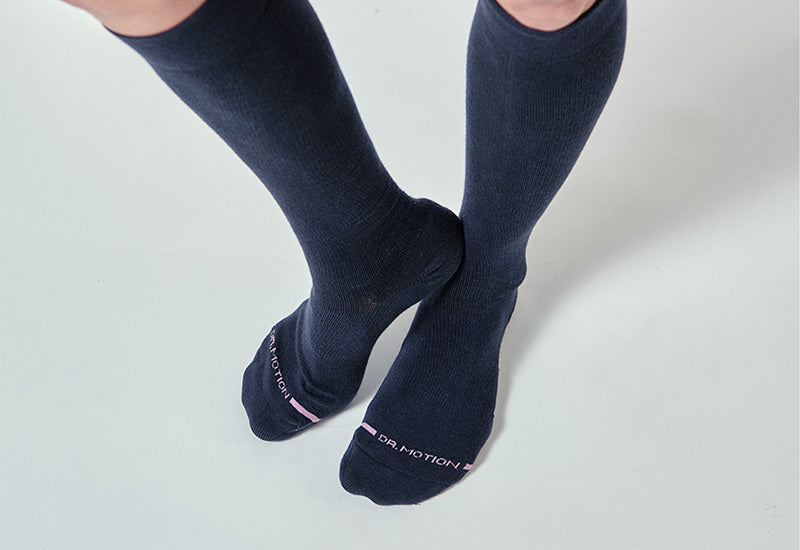
Our Everyday Compression™ Collection follows a conservative, comfort-first approach suited to people managing chronic conditions. Rather than aggressive pressure, the focus is on wearability and gentle support for daily routines.
Each pair of mild graduated compression socks is designed to feel supportive without being restrictive. A non-binding comfort top helps prevent digging around the calf, while smooth toe construction reduces friction. Breathable fabric blends support airflow and moisture control, and light cushioning with flexible arch support aids everyday movement. This way, we ensure our compression socks are designed to support comfort, mobility, and skin tolerance. Explore our collection today!
Disclaimer: This article provides information solely for educational purposes, including but not limited to text, graphics, images, and other materials contained herein. This article is not intended to substitute for professional medical advice, diagnosis, or treatment. Always seek the advice of your physician or another qualified healthcare provider with any questions you may have regarding a medical condition.


Leave a comment
This site is protected by hCaptcha and the hCaptcha Privacy Policy and Terms of Service apply.