

Those faint red and purple lines creeping across your legs are easy to dismiss. But spider veins have a way of multiplying quietly, and the discomfort they bring tends to grow with them. The good news is that something as straightforward as the right pair of compression socks for spider veins can make a real difference in how your legs feel and function each day.
What Are Spider Veins? An In-depth Look
Spider veins are tiny, damaged blood vessels that sit just beneath the skin's surface. When the small valves inside these vessels weaken, blood starts to pool instead of moving upward toward the heart. That pooling is what creates the web-like clusters. Let’s understand a few aspects of this condition.
-
Common Signs of Spider Veins
The visible lines are the most obvious sign, but there is usually more going on. A mild burning or itching sensation near the affected area is common. Some people feel a dull ache after long periods of standing, or notice their legs feeling unusually heavy by the end of the day.
-
Spider Veins vs. Varicose Veins
Both conditions stem from valve weakness in the veins, but they are not the same. Spider veins are small, flat, and sit close to the skin. Varicose veins are larger, may bulge visibly, and typically come with more pronounced symptoms. People managing this condition often look at compression socks for varicose veins alongside other treatments.
-
Where Spider Veins Commonly Appear
The legs are the most common site, particularly the thighs, calves, and the area around the ankles. The face is another location, especially around the nose and cheeks. On the legs, they tend to cluster where circulatory pressure is consistently highest.
-
Who Is More Likely to Develop Spider Veins?
Women develop spider veins more frequently than men, largely because of hormonal factors. Beyond that, people with a family history of vein issues, those who spend most of their workday on their feet, and women during pregnancy face a higher likelihood.
What Causes Spider Veins to Form?
Spider veins build up over time, usually because of a combination of factors pushing the veins past their limits.
-
Staying in one position for hours forces the leg veins to work against gravity without any help from movement, and that constant pressure takes a toll.
-
Estrogen fluctuations during pregnancy, menopause, or hormonal birth control use can weaken vein walls and make them more vulnerable.
-
Family history is one of the strongest predictors, and if your parents dealt with spider veins, your odds are considerably higher.
-
Vein valves also weaken with age, allowing small amounts of backflow where pooling begins.
-
Excess body weight puts consistent extra pressure on leg veins, and a history of blood clots or leg injuries can leave veins permanently weakened in certain spots.
How Compression Socks Help with Spider Veins
Here is what compression socks actually do:
-
Helps Reduce Pressure on Leg Veins
The gentle, graduated squeeze that compression socks apply gives vein walls external support. That means the walls do not have to work as hard on their own, which is part of why people reach for the best compression socks for spider veins as a daily habit.
-
Supports Blood Flow in the Lower Legs
Graduated compression socks push blood upward by applying the most pressure at the ankle, with that pressure easing off toward the calf. This design directly counteracts the pooling that makes spider veins worse.
-
Helps Ease Tired, Heavy Legs
Better circulation means better oxygen delivery to the muscles. This translates to legs that feel noticeably lighter and less worn out, even after days that involve a lot of standing or walking.
-
Helps Reduce Mild Swelling Around the Legs and Ankles
Swelling in the lower legs is a frequent companion to spider veins, especially by the late afternoon. Compression socks limit fluid buildup in the tissue, keeping this puffiness from taking hold.
-
Supports Legs During Long Hours of Standing or Sitting
This is where compression socks for spider veins earn their place in your daily routine. Wearing them through long shifts or desk days helps the veins manage pressure they would otherwise absorb alone.
-
Helps Improve Everyday Leg Comfort
Knee-high compression socks cover the full lower leg. Many wearers report that consistent use simply makes their legs feel better as a baseline. If spider veins extend above the knee, compression leggings can provide additional coverage.
Daily Habits That May Help Support Spider Vein Prevention
Compression socks do the heavy lifting, but pairing them with smart daily habits is worth it.
-
Short walks throughout the day keep blood circulating and reduce pooling.
-
Propping your legs above heart level for a few minutes gives the veins a break and helps blood drain back efficiently.
-
If your job involves long stretches of sitting or standing, take brief breaks and move around.
-
Even moderate weight reduction can take meaningful pressure off the leg veins.
-
Using support stockings for spider veins consistently matters too, because daily wear during demanding hours is where the real benefit shows.
Choosing the Best Compression Socks for Spider Vein Support
A few key factors separate a sock that genuinely helps from one that just looks the part.
-
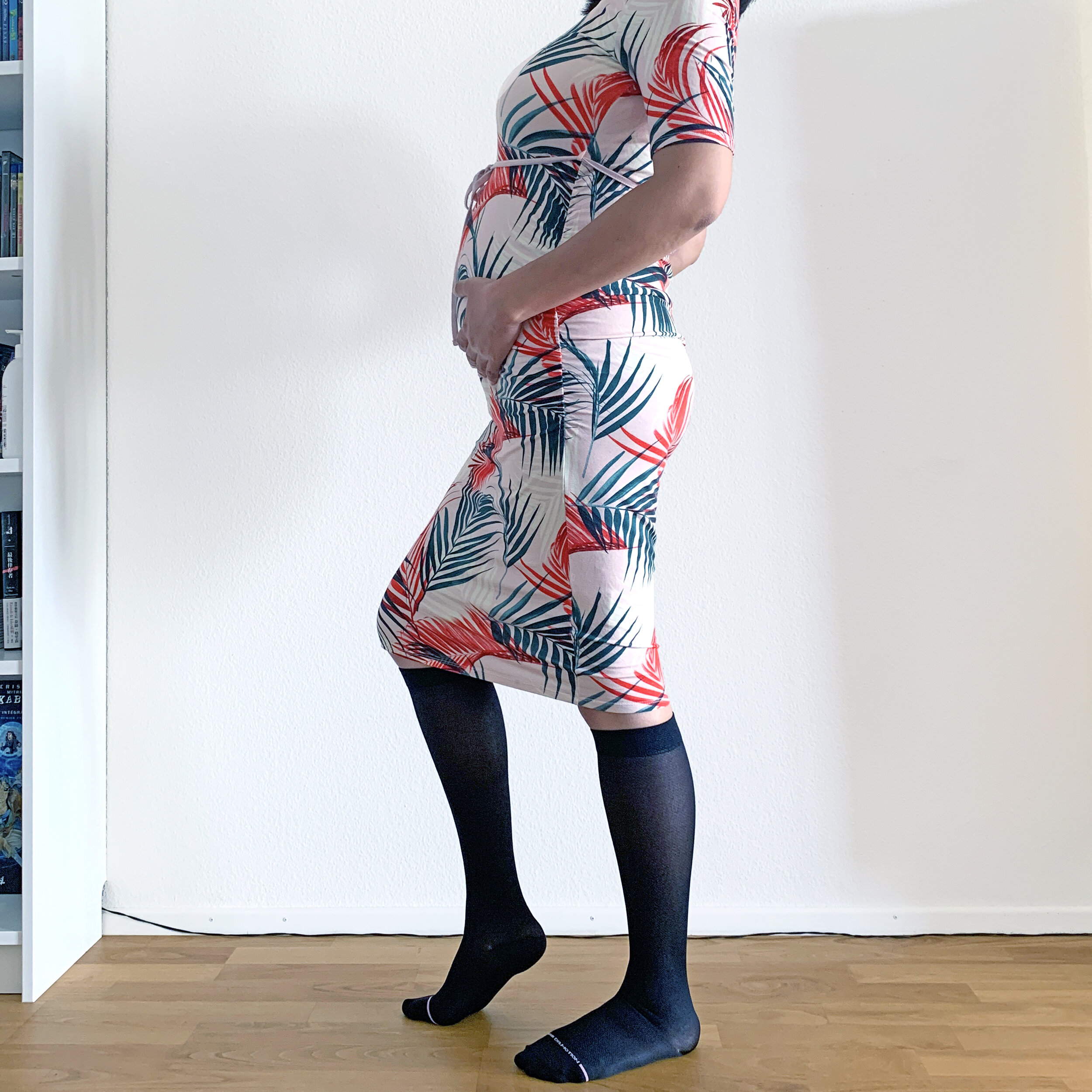
Compression level: For most people with spider veins, 15-20 mmHg is the right starting range for everyday wear. Stronger compression may be appropriate in some cases, but it is worth discussing with a doctor first.
-
Height: For lower leg and ankle spider veins, knee-high coverage gives you the most effective graduated pressure across the affected area. If it extends above the knee, compression leggings can be helpful.
-
Fabric: Breathable, moisture-wicking materials keep the socks wearable throughout the day. Nylon blends and cotton blends both work well, depending on what feels comfortable to you.
Why Choose Dr. Motion for Spider Vein Support
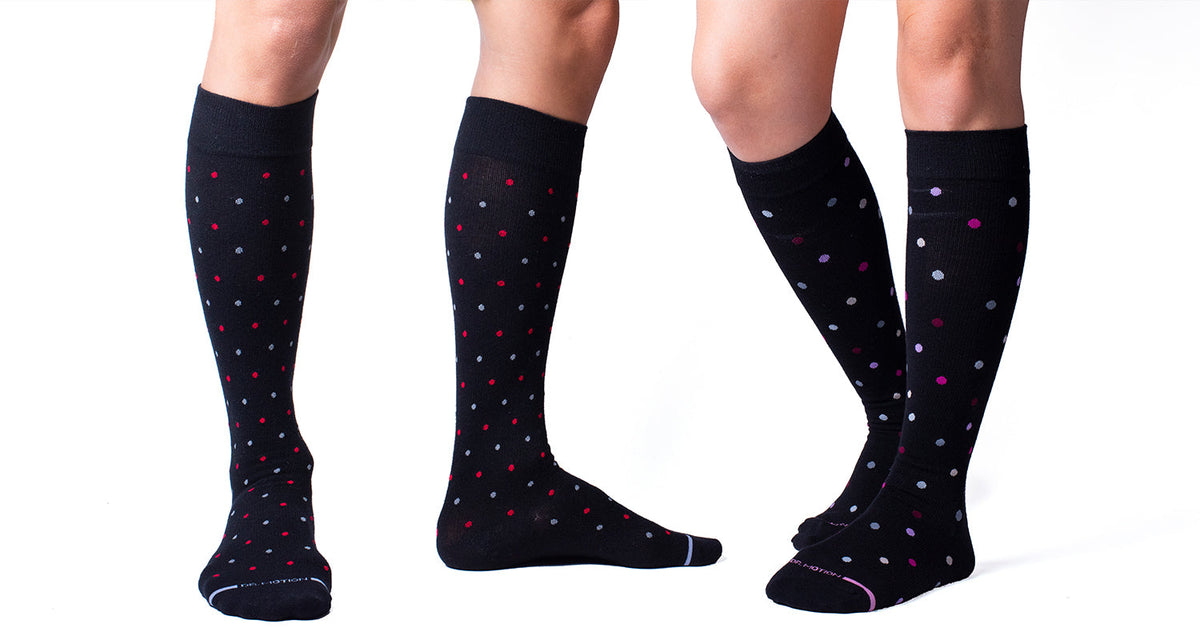
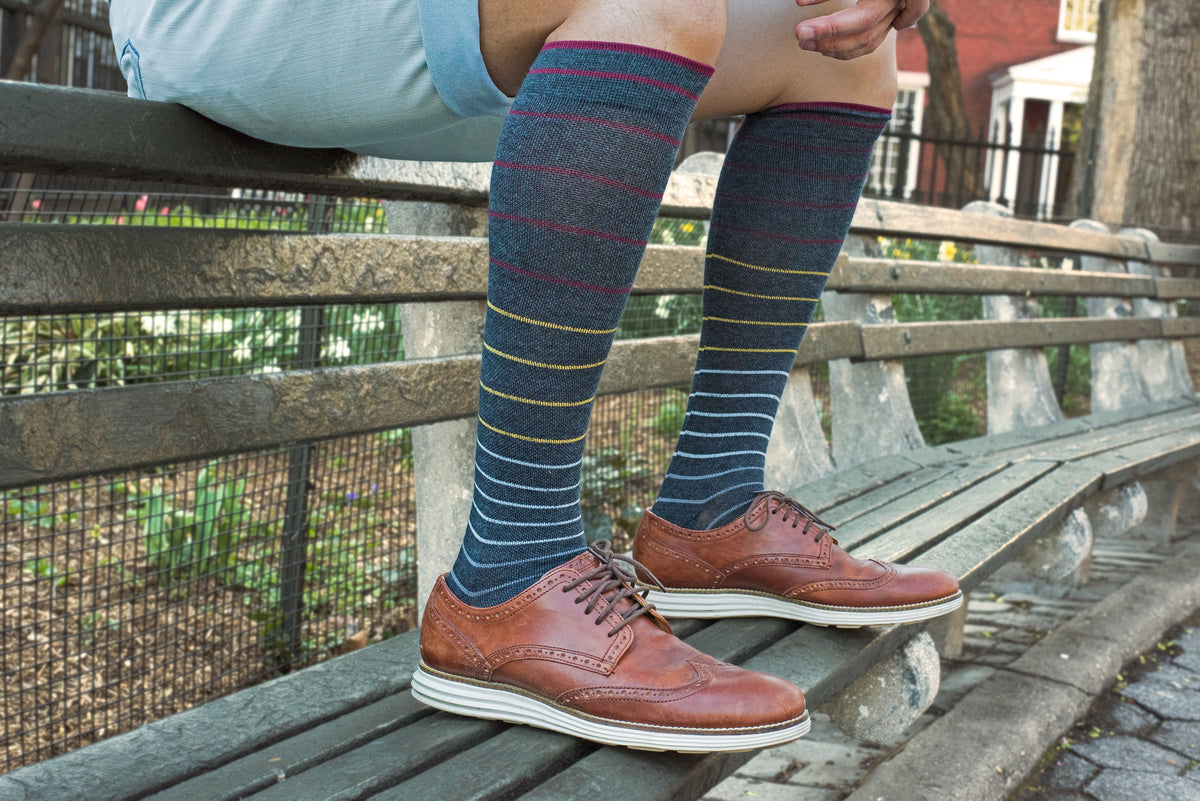
Spider vein management works best when your compression socks fit seamlessly into your life. Our Knee-High Collection comes in a variety of styles and patterns that fit into any wardrobe, with either mild (8-15 mmHg) or moderate (15-20 mmHg) graduated compression. The non-binding comfort cuff maximizes stretch without digging into the leg, and the smooth reinforced toe seam reduces friction and blisters. Plus, the breathable cotton blend fabric keeps your legs fresh all day. Anti-microbial and anti-odor construction means every wear feels as good as the first. If your concern extends above the knee, our Graduated Compression Tights offer extended, full-leg support. Consistent support worn daily adds up, and we make that consistency easy to maintain.
Disclaimer: This article provides information solely for educational purposes, including but not limited to text, graphics, images, and other materials contained herein. This article is not intended to substitute for professional medical advice, diagnosis, or treatment. Always seek the advice of your physician or another qualified healthcare provider with any questions you may have regarding a medical condition.


Leave a comment
This site is protected by hCaptcha and the hCaptcha Privacy Policy and Terms of Service apply.