

CrossFit training is demanding by design. Workouts move quickly, combine multiple movement patterns, and push intensity from start to finish. Between lifting, jumping, running, and conditioning, the body is under constant load. The lower legs often feel that strain first. Calves tighten, shins feel sore, and fatigue can show up earlier than expected.
Many athletes start looking for small adjustments that improve comfort without changing how they train. Compression socks are one of those additions. They support circulation, help manage muscle fatigue, and make long or intense sessions feel more manageable. Compression socks for CrossFit are not about changing performance overnight. They are about helping the lower legs handle the volume and intensity that come with consistent training.

Why CrossFit Athletes Struggle With Calf Fatigue, Shin Pain, and Lower-Leg Burn
The calves and shins work hard in almost every CrossFit workout. They stabilize the ankles during squats, lifts, jumps, and fast transitions, while also helping generate power during running and jump rope sets. Because they stay active for most of the session, they rarely get extended rest, which makes fatigue build quickly over time.
High repetition movements cause the lower leg muscles to contract again and again throughout a workout. As this continues, circulation in the calves and shins can slow, especially during longer WODs with minimal rest. When blood flow cannot keep up, muscles fatigue faster, and the familiar burning sensation becomes more noticeable by the end.
Shin discomfort often comes from repeated impact during running, box jumps, and skipping, which stresses already tired lower leg muscles. When fatigue builds, moderate impact can feel uncomfortable and linger after training.

When Compression Socks Help Most in CrossFit Workouts
Compression socks are most helpful during workouts that place consistent stress on the calves and shins. Here’s how:
-
Double-Under Heavy CrossFit WODs
Double unders require fast, repeated calf engagement. As sets get longer, fatigue builds, and form can suffer. Compression socks help limit muscle movement and provide a more supported feel during extended jump rope work.
-
CrossFit Running + Metcon Combination Workouts
Workouts that mix running with strength or bodyweight movements challenge endurance and circulation. Compression helps maintain lower leg comfort as athletes move between different exercises and intensities.
-
Rope Climbs and Shin-Friction Movements in CrossFit
Rope climbs demand strong calf engagement for foot locks and expose the shins to friction. Compression adds a layer of protection while supporting the muscles through repeated climbs.
-
Box Jumps and Plyometric-Focused CrossFit Sessions
Plyometric workouts involve repeated impact with the ground. Over time, this increases fatigue in the calves. Compression socks provide added support and help athletes feel more stable during jumping movements.
-
Multi-Event CrossFit Competitions and Back-to-Back WODs
During competition days, recovery time is limited. Compression supports circulation between events and helps the lower legs feel more ready for the next workout.
How CrossFit Athletes Should Choose the Right Compression Socks
The right compression socks can make CrossFit training feel more comfortable and controlled. Here’s how to choose a pair that supports your workouts and recovery.
-
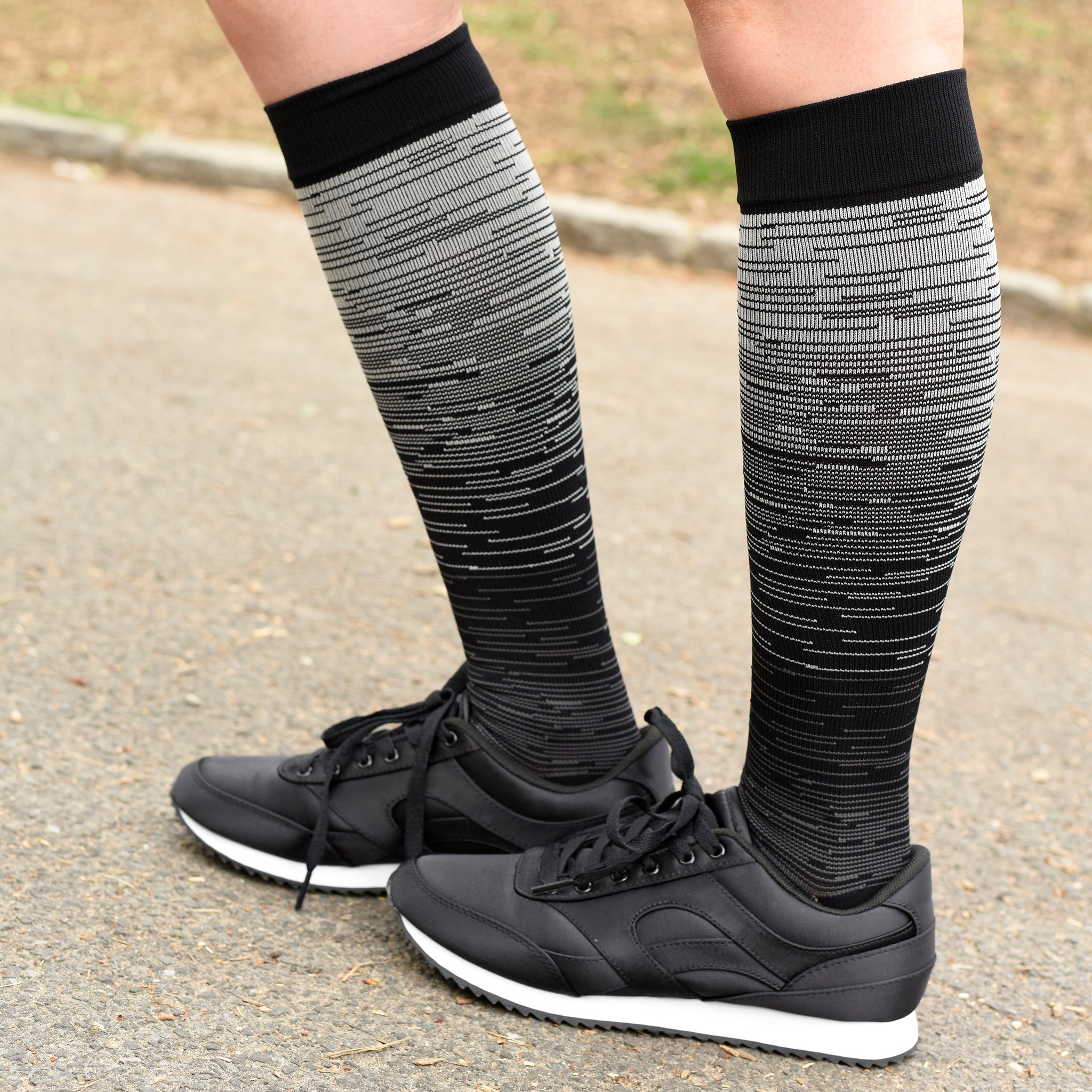
Graduated Compression and Proper Fit
Graduated compression supports blood flow by applying firmer pressure at the ankle and gradually easing upward. We design our compression socks so they feel supportive without restricting ankle mobility during squats, lifts, or dynamic movements.
-
Appropriate Compression Level
The right compression level should balance support and comfort. We focus on light to moderate compression that helps manage lower leg fatigue while remaining easy to wear during workouts and post-training recovery. This approach allows athletes to benefit from sports compression socks without feeling overly restricted.
-
Breathable and Durable Materials
CrossFit training demands materials that can handle sweat, friction, and frequent washing. Our compression socks are made with breathable, moisture-wicking fabrics that support airflow and comfort during long or intense sessions while holding their shape through repeated use.
-
Coverage and Sock Height
Coverage affects how much of the lower leg receives support. Some athletes prefer calf compression sleeves for targeted support. Meanwhile, others choose knee-high compression socks for consistent coverage from ankle to calf. We offer multiple coverage options to match different training styles and recovery needs.

When to Wear Compression Socks in Your Training Week
Compression socks are most effective when used intentionally. Many athletes wear them during high-impact or high-volume lower-body sessions. Others use them during endurance-focused workouts or competition simulations.
Compression can also support recovery outside the gym. Wearing them after training or during long workdays can help reduce lingering tightness in the legs. Knowing how to wear compression socks for CrossFit means matching their use to training demands rather than wearing them automatically every session.
Paying attention to how your legs feel during and after workouts helps determine when compression provides the most benefit.
Common Compression Sock Mistakes CrossFitters Make
One common mistake is wearing running socks instead of compatible compression. Running socks may feel snug, but they do not provide true graduated compression or the durability needed for CrossFit training.
Another mistake is choosing compression that is too aggressive. Overly tight socks can restrict movement and become uncomfortable during dynamic lifts.
Some athletes expect compression to solve issues related to training volume or recovery habits. Compression supports comfort and circulation, but it does not replace smart programming, proper warm-ups, or rest.
Inconsistent use is another issue. Compression works best when worn during workouts that place higher stress on the lower legs.
Why Choose Dr. Motion for CrossFit Training & Recovery
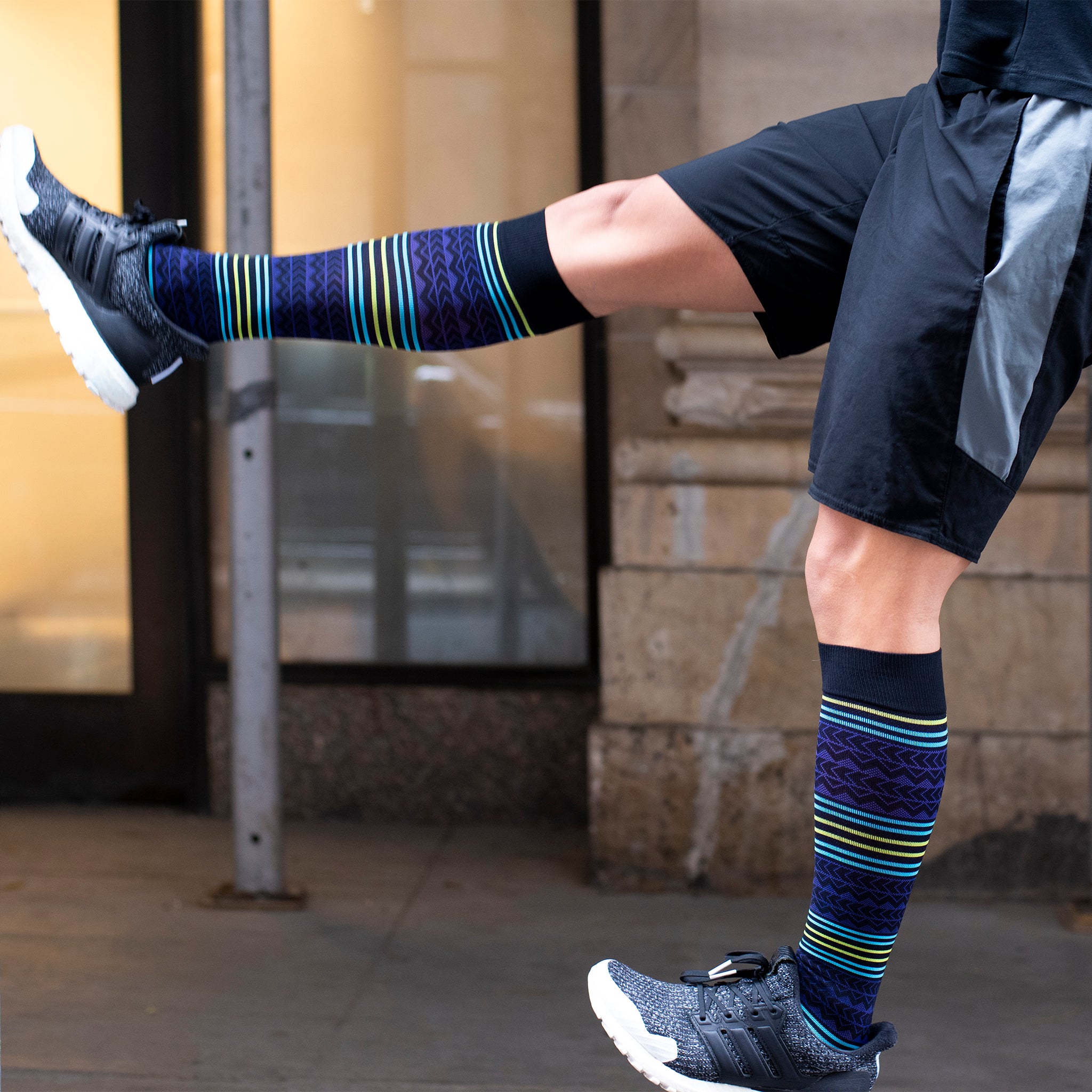
We design sports compression socks with functional training in mind. We understand how demanding CrossFit workouts can be on the lower legs and how important comfort is during long training weeks. Therefore, our socks are built to support circulation, manage fatigue, and stay comfortable through intense sessions.
We focus on balanced compression that supports movement without limiting it. Reinforced areas help withstand rope climbs, while breathable fabrics keep feet comfortable during conditioning workouts. Our designs stay secure through lifts, jumps, and transitions.
For athletes looking for the best compression socks for CrossFit, we prioritize durability, comfort, and real training needs. Compression should feel supportive, not noticeable. When used intentionally, it becomes a practical part of a training and recovery routine that supports consistency and long-term progress.
Disclaimer: This article provides information solely for educational purposes, including but not limited to text, graphics, images, and other materials contained herein. This article is not intended to substitute for professional medical advice, diagnosis, or treatment. Always seek the advice of your physician or another qualified healthcare provider with any questions you may have regarding a medical condition.


Leave a comment
This site is protected by hCaptcha and the hCaptcha Privacy Policy and Terms of Service apply.