



Article: TED Hose vs Compression Socks — Key Differences Explained

TED Hose vs Compression Socks — Key Differences Explained
If you have been researching ways to support circulation, you have likely seen both TED hose and compression socks mentioned. They may seem similar, but they are made for different situations. Understanding the difference between TED hose and compression socks helps you choose the right option based on your mobility, comfort needs, and daily routine.
Both support blood flow in the legs. The key difference lies in when and how they are used. TED hose are meant for medical recovery when movement is limited. Compression socks are designed for people who are active and want circulation support during normal daily activities.
Knowing which one suits your needs can help you stay comfortable and support your leg health more effectively.

What Are TED Hoses?
TED hose, or thromboembolism deterrent hose, are medical stockings used to help prevent blood clots in people who are not moving much. They are often used in hospitals after surgery or during recovery periods that require extended bed rest.
When the legs stay still for long periods, circulation slows down. This can increase the risk of clot formation. TED hose apply light pressure to help maintain blood flow and reduce pooling in the lower legs.
These stockings are usually white and simple in appearance. Many have an opening near the toes so circulation can be checked easily. They are typically worn for short periods under medical supervision. Because their purpose is purely medical, TED hose are designed for function rather than style.
TED hose typically provide mild compression, usually around 8–18 mmHg, which helps maintain circulation when someone is lying down or not moving much. They are designed for inactive situations rather than daily movement or long walks.
What Are Compression Socks?
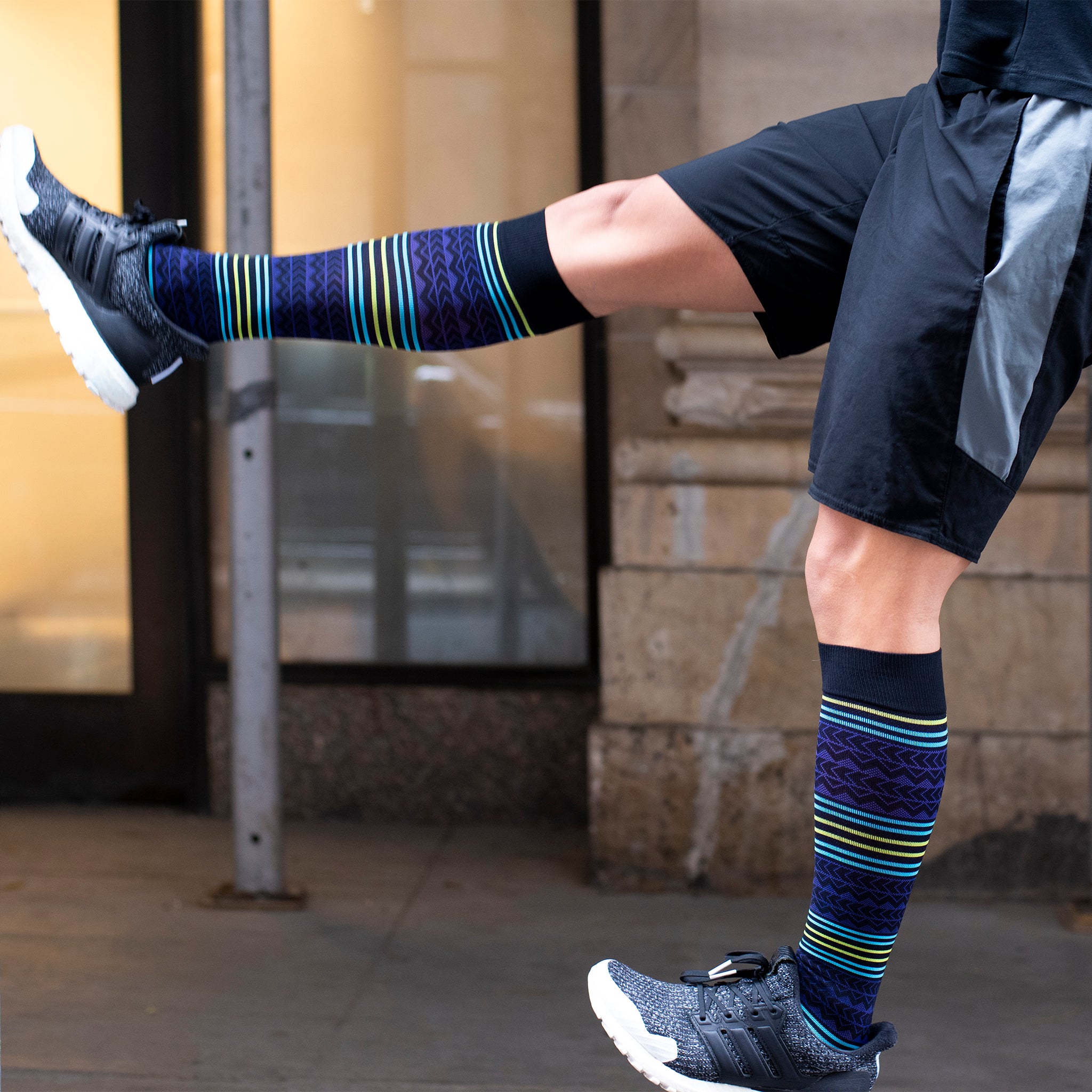
Compression socks are designed for people who are mobile and want to support healthy circulation. They use graduated compression, which applies firmer pressure at the ankle and gradually reduces pressure higher up the leg.
This design helps encourage steady blood flow. It can also help reduce fatigue, discomfort, and swelling that may occur during long periods of sitting or standing.
These socks are available in different compression levels. While TED hose usually provide mild pressure, compression socks can range from mild to moderate and even stronger levels. Our collection at Dr. Motion focuses on mild and moderate compression (8-15 mmHg and 15-20 mmHg), designed for everyday wear and regular movement.
Our collection includes knee-high compression socks that support the lower leg while staying comfortable for extended wear. We offer compression socks for women and men, with designs that range from bold and fun to basic colors and subtle details. They are made to suit your style and fit flawlessly into your daily outfits, helping your legs feel more supported through everyday routines.

TED Hose vs Compression Socks — Core Differences
Are you wondering what the difference is between compression stockings and TED hose? This table helps clarify TED stockings vs compression stockings and how their purposes differ.
Features |
TED Hose |
Compression Socks |
|
Primary purpose |
Prevent clot formation during immobility |
Support circulation during daily activities |
|
Intended user |
Bedridden or recovering patients |
Active, mobile individuals |
|
Compression type |
Mild and consistent pressure |
Graduated compression |
|
Typical compression level |
8–18 mmHg (mild compression) |
8–15 mmHg (mild) 15–20 mmHg (moderate) 20–30 mmHg (firm) 30–40 mmHg (strong) |
|
Mobility level |
Limited mobility use |
Designed for movement |
|
Wear setting |
Hospital or recovery |
Everyday settings |
|
Prescription requirement |
Often used with medical guidance |
Widely available for general use |
|
Comfort during walking |
Not designed for walking comfort |
Comfortable for daily movement |
|
Duration of wear |
Temporary use |
Suitable for regular wear |

When TED Hose Are the Right Choice
TED hose are usually recommended when someone has very limited movement, such as after surgery or while recovering in a hospital bed. When the legs stay still for long periods, circulation can slow down, which is why light compression may be used during recovery. These stockings help maintain blood flow while the body heals and mobility is restricted. They are typically worn for a short period and removed once regular movement begins again. As people return to normal activity, compression socks designed for Everyday Compression™ can provide more practical support for daily routines.
When Compression Socks Are the Better Option
Compression socks for men and women fit easily into everyday life, since they are made for people who are on their feet, walking around, or even sitting for long stretches. They are often worn during office hours, while running errands, or on travel days when legs tend to feel heavy or tired. This is where compression socks vs TED hose becomes easier to understand, because compression socks are meant for regular movement, not recovery in bed. Many people choose to wear them often simply because their legs feel more supported and less fatigued by the end of the day.
Common Myths About TED Hose and Compression Socks
Let’s debunk some of the common myths on anti-embolism stockings vs compression stockings:
1. “They’re basically the same thing.”
Anti-embolism stockings and compression socks serve different purposes. TED hose are meant for recovery, while compression socks support active use.
2. “Higher compression is always better.”
The right compression level depends on your needs. Moderate compression is often enough for daily support.
3. “Either option works for all situations.”
TED hose and compression socks are not interchangeable. Each serves a specific role based on mobility and recovery needs.
How to Decide Which One You Need
Choosing the right option depends on your routine and physical condition.
-
Activity Level
If you move regularly, compression socks are usually the better option. The TED hose is designed for limited movement.
-
Medical Condition or Recovery Stage
During recovery, TED hose may be recommended. Whereas for everyday circulation support, compression socks are often more suitable.
-
Wear Duration
TED hose are worn temporarily. Compression socks are suitable for regular use.
-
Doctor or Provider Recommendations
Medical advice is important during recovery. Meanwhile, for daily support, comfort and activity level help guide your choice.

Choosing the Right Compression for Everyday Use with Dr. Motion
For daily wear, compression socks can make a noticeable difference in how your legs feel by the end of the day. Our collection is created to support steady circulation while still feeling easy and natural to wear. Since everyday routines often involve sitting, standing, or moving throughout the day, consistent compression can help your legs feel more at ease and less strained.
Disclaimer: This article provides information solely for educational purposes, including but not limited to text, graphics, images, and other materials contained herein. This article is not intended to substitute for professional medical advice, diagnosis, or treatment. Always seek the advice of your physician or another qualified healthcare provider with any questions you may have regarding a medical condition.
Read more

What to Bring to Comic Con: The Ultimate Fan Checklist
This blog covers everything you would need to know to ensure that you have a smooth and comfortable experience.
Read more