


Compression Socks for Jumping Rope: Do They Improve Performance and Recovery?
You probably did not expect a jump rope to humble you. It looks simple enough: a rope, two handles, and some floor space. But after a few hundred skips, your calves are burning, your ankles feel the beat, and your legs are done for the day long before your lungs are. If you have been sleeping on compression socks for jumping rope, this one is going to change how you train.

Should You Wear Compression Socks for Jump Rope Workouts?
Yes, absolutely. Jump rope places continuous, repetitive stress on the lower legs in a way most people underestimate, and compression socks help with that kind of load. Whether you are doing speed intervals, double-unders, or endurance rounds, wearing compression socks for jump rope sessions can make a genuine difference in how your legs feel mid-workout and the next morning.
Why Jump Rope Is Tougher on Your Legs Than It Looks
Jump rope gets underestimated constantly, and your legs pay the price. Here is what is actually happening when you skip:
-
Rapid, repetitive ground contact: Each landing sends a force through your foot, ankle, and calf that your body has to absorb and redirect almost immediately. At even a moderate pace, you are doing this hundreds of times per minute.
-
Calf-dominant mechanics: Jump rope relies almost entirely on plantarflexion, which means your calves are the primary engine. They never really get a break between skips, which accelerates fatigue faster.
-
Ankle instability under load: The quick, tight movement pattern of jumping rope demands stability from your ankle joint on every landing. Any deviation in form compounds the stress.
-
Blood pooling from sustained effort: During longer sessions, blood and fluid can accumulate in the lower legs, contributing to that heavy, tight feeling that makes the last few rounds a grind.

How Compression Socks Support High-Impact Jump Rope Sessions
Compression socks for jumping rope are a genuine fit. Here is how each benefit connects to what your legs actually go through:
-
Reduced muscle oscillation: Every time your foot hits the ground, the soft tissue in your calf vibrates. Compression socks apply graduated pressure that limits this oscillation, which reduces the microtrauma that accumulates over hundreds of skips.
-
Better lower-leg support: The ankle and lower calf take the brunt of jump rope mechanics. The snug, structured fit of performance compression socks reinforces this area, helping your muscles stay aligned through each landing and push-off.
-
Less perceived calf fatigue: When your muscles are better supported and circulation is more efficient, your calves simply do not feel as gassed as quickly. You get more quality skips before the burn becomes a limiting factor.
-
Improved comfort during longer sessions: Extended jump rope rounds generate heat and friction. Compression socks with moisture-wicking fabric keep your lower legs cooler and reduce the discomfort that tends to cut sessions short.
-
Recovery after repetitive impact: The graduated compression continues doing its job after your last skip. By supporting venous return, sports compression socks help clear metabolic byproducts and reduce next-day soreness following demanding sessions.

Compression Socks Before, During, or After: When Should You Wear Them?
Timing matters more than most people think. Here is how to use compression socks across your training day:
-
Before training: Putting on compression socks before you pick up the rope helps prime circulation in the lower legs and gives your calves a supported baseline before impact begins.
-
During workouts: Wearing them throughout your session delivers consistent support, manages swelling from sustained effort, and keeps fatigue from building as fast.
-
After workouts for recovery: Keeping them on for 30 to 60 minutes after training helps flush out lactic acid buildup and reduces the heavy-leg feeling that follows high-rep jump rope work.
What to Look for in Compression Socks for Jump Rope
Generic sock advice does not really apply here. Jump rope has specific demands, and your compression socks should meet them:
-
Graduated compression in the 15 to 20 mmHg range: This level is firm enough to make a real difference during high-impact activity without restricting movement through your ankle on each skip.
-
Ankle reinforcement: Look for socks with structured support around the ankle specifically, not just the calf.
-
Moisture management fabric: Skipping generates heat fast. Breathable, wicking material keeps your lower legs from overheating and reduces blister risk.
-
Low-profile heel and toe construction: Bulk in the wrong places creates friction under a jump rope shoe. A seamless or flat-knit toe box is important.

Common Jump Rope Mistakes That Can Leave Your Legs Feeling Beat Up
Even with the right gear, technique gaps will leave your legs paying the bill. These are the mistakes that show up most often:
-
Landing on your heels: Jump rope is a forefoot activity. Heel striking amplifies impact dramatically and sends excessive force through the ankle and shin rather than distributing it through the calf as intended.
-
Jumping too high: You only need an inch or two of clearance for the rope. Jumping higher than necessary multiplies landing impact with every single rep and exhausts your legs faster.
-
Skipping the warm-up: Cold calves and jump rope are a rough combination. A few minutes of ankle circles, calf raises, and light movement before you start makes a measurable difference.
-
Ignoring surface choice: Concrete is unforgiving. A rubber mat, wood floor, or sprung surface absorbs impact your joints would otherwise take directly.
-
Overreaching session length: Jump rope fatigue accumulates quietly and then hits hard. Starting with shorter rounds and building over weeks can be a good way to start.
Are Compression Socks Better Than Regular Athletic Socks for Jump Rope?
For jump rope specifically, yes. Regular athletic socks provide cushioning and basic moisture management, but they do not address what makes jump rope hard on the lower legs: repetitive impact, calf fatigue, and circulation load over sustained effort.
Calf compression sleeves or performance options add graduated pressure that actively supports soft tissue, improves blood flow during and after training, and reduces the fatigue accumulation that regular socks simply cannot touch. The difference is most noticeable during longer sessions and in the hours after training.
If you are only jumping rope occasionally for a few minutes, the gap is smaller. But for anyone training with intent, the comparison is not really close.
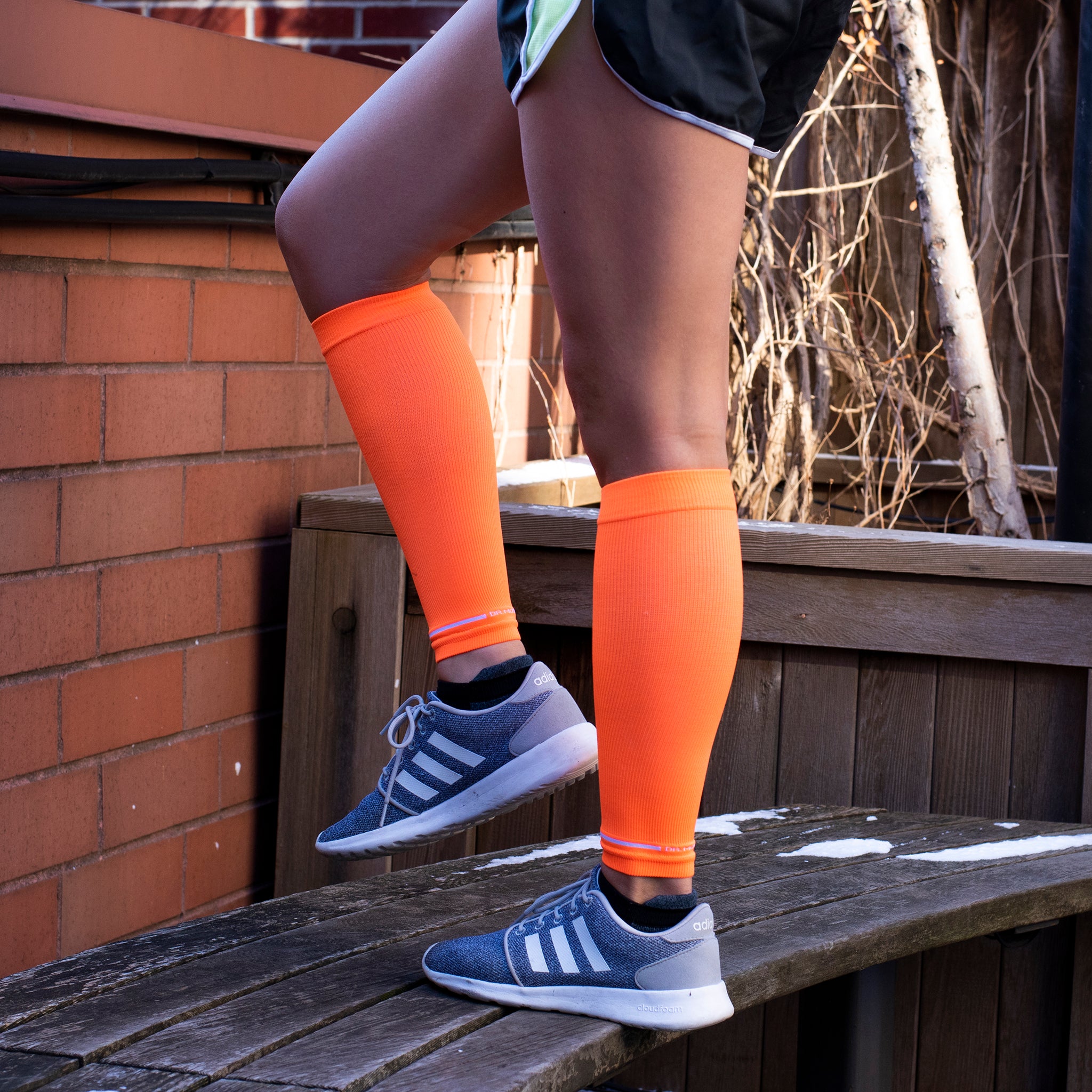
Jump Farther, Recover Smarter with Dr. Motion Compression Socks
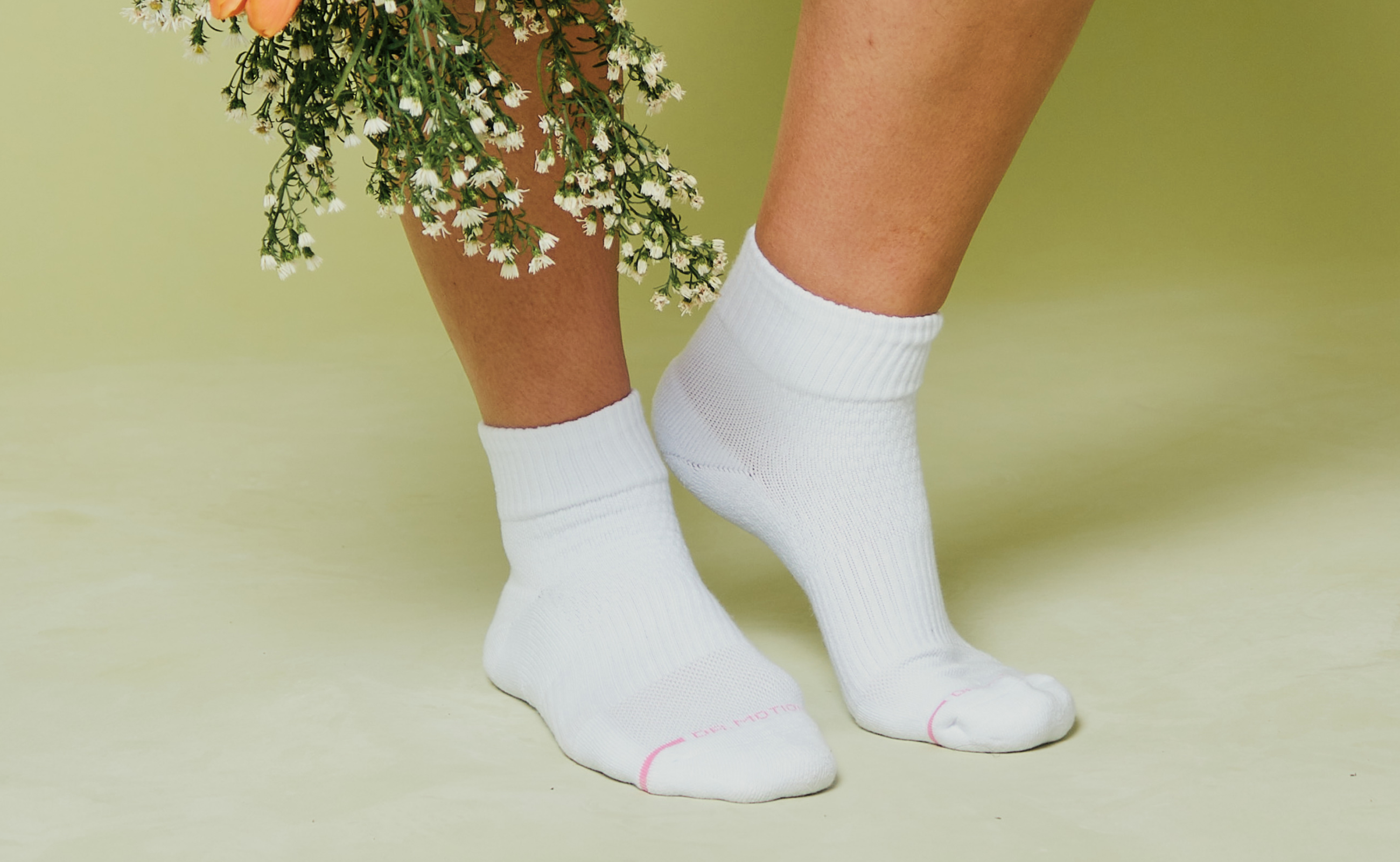
Your jump rope workouts demand more from your legs than most people give them credit for. The calves power every skip, the ankles absorb every landing, and by the end of the session, your lower legs have done a lot of quiet, unglamorous work. Our Sports Performance Compression Collection can be an effective piece of gear for your jump rope session:
-
15-20 mmHg moderate compression to keep circulation moving and reduce fatigue during high-rep efforts
-
Cushioned heel and sole pad with Ultrafresh yarn treatment for impact absorption and all-session comfort
-
Arch support for a secure, stable fit through every landing and push-off
-
Nylon upper construction for reinforced lower-leg support
-
Seamless reinforced toe to eliminate friction and hotspots
-
Moisture-wicking treatment to keep your feet cool and dry, round after round
Explore our Sports Collection today. Your calves put in the work. We will help them bounce back.
Disclaimer: This article provides information solely for educational purposes, including but not limited to text, graphics, images, and other materials contained herein. This article is not intended to substitute for professional medical advice, diagnosis, or treatment. Always seek the advice of your physician or another qualified healthcare provider with any questions you may have regarding a medical condition.
Read more
Compression Socks for Basketball: Are They Worth Wearing?
They can provide a supportive fit, promote healthy circulation, and complement recovery after demanding games and practices.
Read more
Compression Socks for Heat Edema: Can They Help Reduce Swelling?
Compression socks for heat edema are a simple, wearable solution that more people are turning to, and they work better than you might think.
Read more